Introduction
The Solar Progress
Welcome to Solar Progress!
Solar Progress – Discover Energy is a monthly newsletter by PIXON.
With Solar Progress, we are dedicated to bring you the latest updates and insights on the exciting world of solar technology. From photovoltaic panels and solar cell technology, smart grids and also innovative financing models, we cover it all. Our team of experts will keep you informed on the latest research, industry trends, and policy developments, helping you stay up-to-date on this rapidly evolving field. Whether you are a solar industry professional, a renewable energy enthusiast, or simply interested in learning more about how solar power can shape the future, we have something for you.
So join us, and let’s explore the limitless potential of solar energy together.
India
The Growth in Solar Energy Sector
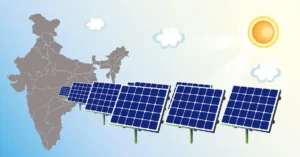
India has made a significant progress in the solar energy sector in recent years. The country’s vision is to achieve Net Zero Emissions by 2070, to achieve it the missions include target to Increase the renewables capacity to 500 GW with Meeting 50% of energy requirements from renewables by Year 2030.
As of today, India is the world’s third largest producer of renewable energy.
The Indian government has implemented a number of initiatives to promote the growth of the solar energy sector, including the National Solar Mission and the Jawaharlal Nehru National Solar Mission. These initiatives have helped to make solar power more affordable and accessible, and have attracted significant investment in the sector.
In addition to government initiatives, the growth of the solar energy sector in India has also been driven by the increasing cost competitiveness of solar power compared to other forms of energy. The falling costs of solar technology have made it an increasingly attractive option for both businesses and households.
Solar Modules
The Growth and opportunity across the globe
The solar panel manufacturing industry in India has been growing in recent years, with a number of companies entering the market and expanding their production capabilities. The increasing demand for solar panels in India and around the world has fueled this growth.

India is home to a number of large solar panel manufacturers. These companies have state-of-the-art manufacturing facilities and produce a range of solar panels, including monocrystalline, polycrystalline, and thin-film panels.
In addition to traditional solar panels, there are also a number of innovative solar panel technologies being developed in India. For example, researchers at the Indian Institute of Technology Bombay have developed a new type of solar panel that is more efficient at converting sunlight into electricity. Other researchers are working on developing flexible and transparent solar panels that could be used in a variety of applications.
Overall, the solar panel manufacturing industry in India is vibrant and growing, and there are many exciting advancements and innovations on the horizon.
Solar Module Technology
Current technology and upcoming industry trends
Solar Module Technology is growing in a very fast pace.
There are several advancements and innovations in solar panel technology that are currently in development or are expected to be introduced in the near future. Some of the most promising developments includes but not limited to;
Higher efficiency Solar Modules
Researchers are working on developing solar panels that are more efficient at converting sunlight into electricity. This could lead to smaller, more compact panels that produce more power.
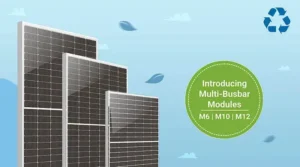
Higher efficiency solar panels are panels that are able to convert a higher percentage of the sunlight that they receive into electricity. There are several ways in which researchers are attempting to increase the efficiency of solar panels, including:
- Improved materials: Scientists are working on developing new materials that can be used in solar panels to increase their efficiency. For example, researchers have developed a new type of solar cell made from perovskite, a material that is able to absorb more sunlight than traditional silicon cells.
- Multi-junction cells: These cells are made up of multiple layers of materials, each of which is optimized to absorb a specific range of wavelengths of sunlight. By using multiple layers, these cells are able to capture more of the energy in sunlight and convert it into electricity.
- Concentrating photovoltaics (CPV): CPV systems use lenses or mirrors to concentrate sunlight onto a small area of high-efficiency solar cells. This allows the cells to produce more power, as they are receiving more concentrated sunlight.
- Tandem cells: These cells are made up of two or more layers of materials, each of which is optimized to absorb a different range of wavelengths of sunlight. By using multiple layers, these cells are able to capture more of the energy in sunlight and convert it into electricity.
Overall, the goal of higher efficiency solar panels is to increase the amount of electricity that can be produced from a given area of solar panels, which could lead to smaller, more compact panels that are more cost-effective to install and maintain.
Flexible and transparent panels
There is ongoing research into developing flexible and transparent solar panels that could be used in a variety of applications, such as on windows or on portable devices.
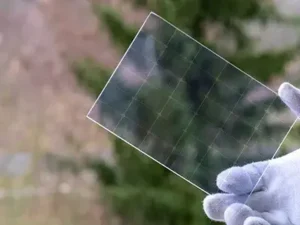
- On windows: Flexible and transparent solar panels could be used on windows to generate electricity from sunlight. This could allow buildings to generate their own power and reduce their reliance on the grid.
- On portable devices: Flexible solar panels could be used to power portable electronic devices, such as smartphones or laptops. This could allow these devices to be charged using sunlight, eliminating the need for a separate power source.
- On vehicles: Transparent solar panels could be used on the roofs or windows of vehicles to generate electricity while the vehicle is in motion. This could help to reduce the need for traditional fuel sources.
- In other applications: Flexible and transparent solar panels could also be used in a variety of other applications, such as on tent roofs or as part of portable solar chargers.
There are several materials that are being researched for use in flexible and transparent solar panels, including organic materials, perovskite, and graphene. These materials have the potential to be used to create solar panels that are both flexible and transparent, or that have one of these properties.
Solar panel coatings
Researchers are also working on developing coatings for solar panels that could increase their efficiency by reducing the amount of sunlight that is reflected away.
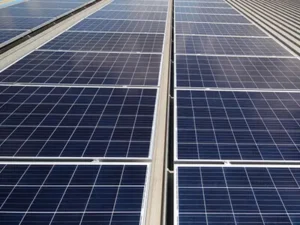
Solar panel coatings are thin layers of material that are applied to the surface of solar panels to improve their performance. There are several ways in which solar panel coatings can be used to improve the efficiency of solar panels, including:
- Anti-reflective coatings: These coatings are designed to reduce the amount of sunlight that is reflected away from the surface of the solar panel. By allowing more sunlight to be absorbed by the panel, these coatings can increase the amount of electricity that is produced.
- Self-cleaning coatings: These coatings are designed to keep the surface of the solar panel free of dirt, dust, and other contaminants that can reduce its efficiency. By keeping the panel clean, these coatings can help to ensure that it is operating at maximum efficiency.
- Heat-resistant coatings: These coatings are designed to protect the solar panel from the effects of high temperatures. By preventing the panel from overheating, these coatings can help to increase its lifespan and maintain its efficiency.
- UV-resistant coatings: These coatings are designed to protect the solar panel from the damaging effects of ultraviolet (UV) radiation. By protecting the panel from UV radiation, these coatings can help to increase its lifespan and maintain its efficiency.
Overall, solar panel coatings can be an effective way to improve the performance of solar panels and increase their efficiency.
Three-dimensional solar panels
Some researchers are experimenting with the use of three-dimensional structures to improve the efficiency of solar panels. These structures could potentially capture more sunlight and convert it into electricity.
Three-dimensional (3D) solar panels are solar panels that are designed to capture more sunlight by using three-dimensional structures. These structures can be used to increase the surface area of the solar panel, allowing it to capture more sunlight and produce more electricity.

There are several ways in which 3D solar panels can be designed, including:
- Using mirrors or lenses to focus sunlight onto a small area: By using mirrors or lenses to concentrate sunlight onto a small area, 3D solar panels can capture more of the energy in sunlight and convert it into electricity.
- Using three-dimensional structures to capture more sunlight: These structures can be used to capture sunlight from different angles, allowing the solar panel to produce more electricity.
- Using concentrators to increase the intensity of sunlight: These concentrators use lenses or mirrors to increase the intensity of sunlight on the solar panel, which can increase the amount of electricity that is produced.
Overall, 3D solar panels have the potential to be more efficient than traditional flat solar panels, as they are able to capture more sunlight and convert it into electricity. However, they can be more complex and expensive to manufacture, and further research is needed to determine their long-term performance and reliability.
Solar panel recycling
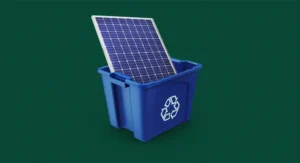
As the use of solar panels increases, there is a growing need for effective recycling methods to ensure that used panels can be repurposed or disposed of in an environmentally-friendly manner. Researchers are working on developing recycling technologies that can recover valuable materials from used solar panels.
Solar panel recycling is the process of recovering materials from used solar panels in order to reuse them in the production of new panels or other products. This is important because it can help to reduce the environmental impact of solar panels, as well as recover valuable materials that can be used again.
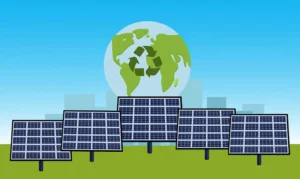
There are several ways in which solar panels can be recycled, including:
- Mechanical recycling: This involves breaking the solar panel down into its component parts and separating the different materials. These materials can then be recovered and used to produce new products.
- Chemical recycling: This involves using chemicals to break down the materials in the solar panel into their constituent parts. These parts can then be recovered and used to produce new products.
- Thermal recycling: This involves heating the solar panel to a high temperature in order to recover the materials it is made from.
Overall, solar panel recycling is an important part of the solar industry, as it helps to reduce the environmental impact of solar panels and recover valuable materials that can be used again. As the use of solar panels continues to grow, it will be important to ensure that effective recycling methods are in place to ensure that used panels can be repurposed or disposed of in an environmentally-friendly manner.
Conclusion
Solar Module Technology
The solar industry has made significant strides in recent years in terms of improving the efficiency and performance of solar modules. From the development of multi-junction cells and advanced materials, to the use of tracking systems and concentrating photovoltaics, there are many exciting technological developments that are helping to drive the growth of solar energy. As the demand for clean, renewable energy continues to increase, it is likely that we will see even more innovative advancements in the field of solar modules in the coming years. With the help of these technologies, it is possible to reduce our reliance on fossil fuels and make the transition to a more sustainable energy future.