Understanding Light Wavelengths in Solar Panels

Understanding Light Wavelengths in Solar Panels

The Sun generates an immense amount of energy every second, which travels through space in the form of radiation. However, due to the vast distance between the Earth and the Sun (approximately 149.6 million kilometers), only a fraction of this energy reaches the Earth’s atmosphere. This fraction is known as the solar constant, with an intensity of 1367 W/m².

Solar panels have revolutionized renewable energy, converting sunlight into electricity through photovoltaic technology. But have you ever wondered what wavelength of light solar panels utilize? This blog dives deep into the fascinating science behind solar panels, highlighting key aspects such as light absorption, technology advancements, and top solar panel manufacturers in India . Let’s unravel how sunlight powers our world.

What is a Wavelength?
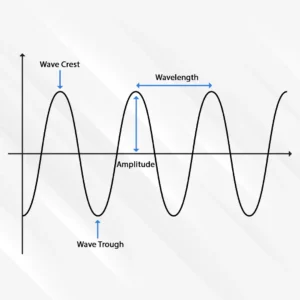
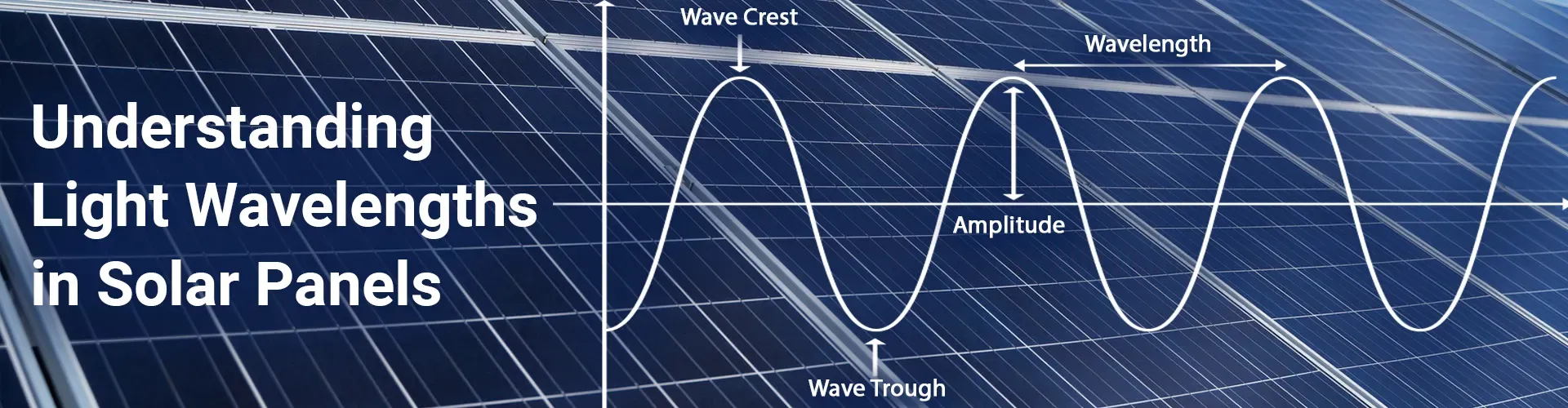
A wavelength is the distance between two successive peaks (crests) or troughs of a wave, typically represented by the Greek letter lambda (λ).Wavelength and frequency share an inverse relationship—higher frequency waves have shorter wavelengths, while lower frequency waves have longer wavelengths.

Understanding the Relationship Between Solar Panels and Wavelengths
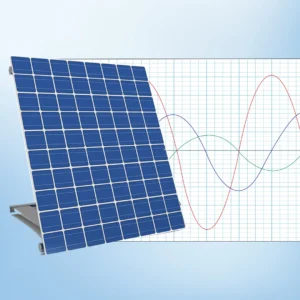
Sunlight spans a spectrum of wavelengths, ranging from approximately 380 nm (violet light) to 750 nm (red light). Solar panels are engineered to absorb light within a specific range of wavelengths, known as the “band-gap.”

This band-gap plays a crucial role in solar energy generation. When sunlight within the panel’s band-gap is absorbed, it creates an electric field, which is harnessed to produce electricity. While solar panels are primarily designed to capture light in the visible spectrum, they can also absorb light in the infrared and ultraviolet ranges.

The standard band-gap range for solar panels spans from 400 nm to 1100 nm, with the majority optimized at approximately 850 nm. These panels are made from semiconductors—materials composed of numerous atoms that allow for the efficient movement of electrons when exposed to light.

By carefully selecting the band-gap, solar module manufacturers ensure that solar panels can effectively capture and convert specific wavelengths of light into electricity, maximizing their energy output.

What Wavelengths of Light Are Most Effective for Solar Panels?

Solar panels are most efficient at capturing sunlight within the visible spectrum—the range of light that our eyes can perceive. Each color in this spectrum carries different energy levels; for instance, blue light has higher energy than red light.

In addition to visible light, solar panels can also utilize some ultraviolet (UV) and infrared (IR) wavelengths. Although invisible to the human eye, these wavelengths hold significant energy. UV light contains more energy than visible light, while IR light has slightly less.

However, solar panels are not efficient at harnessing energy from extremely high-energy wavelengths, such as X-rays and gamma rays, as these can damage the solar cells.

In summary, solar panels are most effective at converting visible light into electricity, with additional capability to harness energy from certain UV and IR wavelengths. This combination ensures optimal performance under varying sunlight conditions.

Types of Solar Panels and Their Wavelength Efficiency
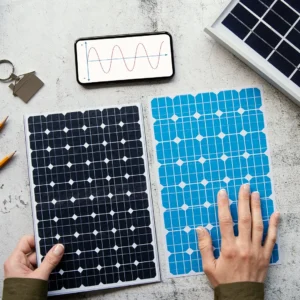
Monocrystalline Solar Panels: Monocrystalline solar panels are known for their high efficiency, capturing a wide range of wavelengths. These panels are ideal for residential and commercial applications. Many solar module manufacturers are innovating in this segment to offer superior performance.

Polycrystalline Solar Panels: Although slightly less efficient than monocrystalline panels, polycrystalline solar panels still perform well in harnessing visible and near-infrared light. This technology has been a staple for many solar panel manufacturers in India.

Thin-Film Solar Panels: Thin-film panels excel in low-light conditions, absorbing a broader spectrum of light. They are particularly effective in cloudy or shaded environments, showcasing how new solar panel technologies adapt to various challenges.

Latest Technology in Solar Panels
Recent advancements in solar PV modules focus on increasing efficiency through:

  • Multi-junction cells capturing multiple wavelengths.
  • Perovskite solar cells with enhanced light absorption.
  • Anti-reflective coatings to reduce energy loss.

These innovations position India as a hub for solar energy advancements.

Check out our product page for detailed insights into cutting-edge solar module technologies, and feel free to contact us for inquiries.

How Solar Panel Efficiency Varies with Wavelengths

Visible Light (400-700 nm): Most solar panels achieve peak efficiency in this range.

Infrared (700-1100 nm): Advanced panels use infrared to generate additional energy.

Ultraviolet (300-400 nm): Limited absorption but utilized by some new solar panel technologies.

Factors Affecting Solar Panel Wavelength Efficiency:
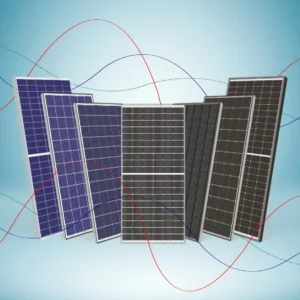
Several factors influence the wavelengths of light that a solar panel can utilize effectively. These factors determine the panel’s overall performance and energy conversion efficiency. Let’s explore each in detail:

1. Material Composition

The material used in solar panels significantly affects the wavelengths they can absorb, their durability, and efficiency. Different materials have unique band-gaps, enabling them to capture specific light wavelengths.

Crystalline Silicon Panels: These are the most common type of solar panels, with a band-gap around 850 nm, making them efficient at absorbing visible and near-infrared light.

Thin-Film Solar Panels: Made from materials like cadmium telluride (CdTe), copper indium gallium selenide (CIGS), and amorphous silicon, these panels have band-gaps ranging from 400 nm to 1100 nm, allowing them to absorb a broader spectrum of light compared to crystalline silicon panels.

2. Size of the Solar Panel

The size of a solar panel impacts its ability to utilize wavelengths effectively.

Smaller Panels: These tend to have a smaller band-gap, limiting their absorption to shorter wavelengths.

Larger Panels: Typically have a wider band-gap, enabling absorption of longer wavelengths.

3. Impurities in the Material

Impurities in the solar panel material can shift the band-gap and affect absorption efficiency.

For instance, doping crystalline silicon with boron reduces the panel’s ability to absorb longer wavelengths, potentially lowering its overall efficiency.

4. Impurities in the Material

Temperature changes influence the band-gap of solar panels.

At Higher Temperatures: The band-gap decreases, making panels less effective at absorbing certain wavelengths.

At Lower Temperatures: The band-gap increases, slightly improving absorption efficiency.

5. Presence of Dust or Dirt

Dust or dirt on the panel surface can block sunlight and alter the wavelengths reaching the cells. Dust accumulation often causes a shift in wavelength absorption between 350–550 nm, leading to significant energy loss.

Regular cleaning ensures that panels maintain their optimal performance.

6. Angle of the Sun

The angle at which sunlight hits the panel affects the wavelengths absorbed.

Direct Sunlight: Provides the highest efficiency as light travels through less atmospheric interference.

Angled Sunlight: Reduces absorption due to increased atmospheric scattering.

7. Type of Glass on the Solar Panel

The glass layer on a solar panel plays a crucial role in affecting light absorption.

Anti-Reflective Coatings: Enhance absorption by reducing light reflection, allowing more wavelengths to reach the solar cells.

Clear Glass: Reflects more light, which can lower efficiency.

8. Panel Thickness

The thickness of a solar panel contributes to its absorption capabilities.

Thicker Panels: Have a higher absorption coefficient, making them more efficient at capturing a broader range of wavelengths.

Thinner Panels: Absorb less light, which can reduce their energy output.

Wrapping Up

Solar panels utilize light across multiple spectrums, with advancements in solar pv modules and new solar panel technologies enhancing their efficiency. Whether you’re looking to adopt renewable energy for your home or business, understanding the wavelengths solar panels use can help you make informed decisions. India’s leading solar panel manufacturers are pioneering innovations to ensure a sustainable future.

Explore our blog section here to deepen your knowledge about renewable energy solutions.

Ready to harness the power of the sun? Explore our cutting-edge solar solutions! Contact Us today for inquiries.

4 Reasons to Invest in Residential Rooftop Solar

4 Reasons to Invest in Residential Rooftop Solar

Today, many people choose to invest in solar panels for various reasons, be it having solar panels on their roof or on a ground-mounted array. But is it effective for everyone? Is it worth spending so much money? Well, it seems the answer is YES.

According to recent statistics shared by JMK Research, India added 8,811 Megawatts of solar energy capacity, between January – September 2021. And this figure is almost 280% greater than last year’s. The Ministry of New and Renewable Energy has also stated that solar energy accounts for 46% of the overall renewable energy category. While on the other hand, wind and bio-power make up the second and third largest renewable energy sources, respectively.

If you’ve always wondered what makes people invest in solar panels, look no further, because we are giving you 4 reasons based on what our customers have said.

Top 4 Reasons to Invest in Residential Rooftop Solar

1. Environmental Benefits

Installing solar rooftop panels not only saves you money but it’s also good for the environment. You actually decrease your carbon footprint and increase overall energy production by installing solar. With less pollution and cleaner air, we’ll be able to reduce our reliance on fossil fuels to the absolute minimum.

2. Financial Benefits

Indians have a strong belief in saving for the future and that’s why we usually strive to invest in conventional techniques like bonds, stocks, and SIPs that provide long-term returns. Investing in solar panels is one example of a modern technique to save money. During the 25+ year lifespan of a solar power system, you generate free electricity and save a lot of money on your electricity bills.

3. Tax Benefits

State and federal tax incentives are the most important reason to invest in solar panels for residential projects. In order to express their support and take into account the high upfront expenses of solar panel installation, the government provides tax benefits and financial schemes.

Talking about Gujarat in particular, the government offers a subsidy (under the residential rooftop solar project scheme 2021) of 40% subsidy upto 3 kw and 20% subsidy for projects ranging above 3kw upto 10kw to boost the installation of roof-top solar panels.

4. Property Value Appreciation

Solar-equipped properties have better property values and sell more rapidly than those that don’t have solar systems. When compared to other similar properties in the market, a house with solar panels has a higher value and is, therefore, more valuable. Demand for solar-powered homes will continue to rise as more people become aware of its benefits.

Conclusion

The safest, cheapest, smartest, and most environmentally friendly way to generate electricity is to use solar panels. India has 1.4 million homes with solar panels, which may provide enormous financial advantages for personal, industrial, and commercial properties.

Can Floatovoltaics Aid In Solar Energy & Methanol Fuel Production?

Can Floatovoltaics Aid In Solar Energy & Methanol Fuel Production?

Do you know that floating solar plants aka solar methanol islands can not only produce solar energy, but can also aid in methanol fuel production?

In today’s era, carbon-based liquid fuels are an important energy storage media. 80% of India’s energy demand is still being met by coal, oil, and solid biomass. It results in greenhouse gases emission at a massive level which is the leading cause of global warming.

Even with the recent technological advancements, solar energy production can no way compete with conventional energy production by carbon-based liquid fuels. Even solar panels for industries and residential rooftops combined cannot produce enough solar energy to meet energy demands at a large scale. So, removing carbon from the atmosphere continues to play a crucial role in saving the earth’s climatic conditions.

The Research & The Findings

According to researchers from Norway and Switzerland, millions of floating solar islands, clustered together can produce enough electricity to significantly reduce the amount of greenhouse gases in the atmosphere by extracting CO2 from the seawater and converting it into methanol fuel.

The solar energy will be converted into electricity with the help of floatovoltaics. This generated electricity will be then used for hydrogen production and CO2 extraction from the seawater. The process of methanol production involves directly hydrogenating pure CO2 with H2 with high selectivity on conventional Cu/ZnO-based catalysts. With perfect pressure and temperature conditions, the hydrogen and carbon dioxide will react with each other to form gases that produce methanol in presence of the catalysts. After shipping it to the end-user, the methanol can be then reused as fuel. This entire process eventually yields zero net CO2 emissions.

Optimum Place For Floating Solar Plants To Operate At Higher Efficiency

The solar methanol islands need to be placed in a safe ocean area with abundant sunlight and satisfactory physical conditions. The solar module manufacturers place the floating solar farms in the ocean areas with wave heights of less than seven meters, low risk of hurricanes, and water depths of less than 600 meters.

The most suitable locations are shorelines along the equator. They have plenty of sunshine and relatively small waves. The list includes Indonesia, the Coasts of Southeast Asia, North Australia, the Arabian Gulf, and Brazil.

Advantages Of Floating Solar Plants

  • Low installation cost as compared to land-based photovoltaic panels
  • No land requirement for solar panel installation
  • 10% greater power production due to the cooling effect of water.
  • The water beneath the panels minimises energy waste
  • Requires low maintenance as the panels remain dirt-free
  • Minimises algae production in water by providing shade
  • Reduce water evaporation by limiting air circulation

Challenges Faced In Methanol Production By CO2 Extraction From Seawater

  • Electrolysing seawater results in chlorine formation
  • Copper–zinc–aluminium catalysts require high pressures and temperatures to function properly
  • There is no large-scale device to extract CO2 from seawater
  • At high temperatures, hydrogen and carbon dioxide can react to form carbon monoxide
  • Cost-effective floating solar solutions are needed to make the project economically viable on a large scale.

Conclusion

It is estimated that the output from 3.2 million floating islands would exceed the total global emissions from fossil fuels. But with all the challenges present, this goal is far from realization at the present moment. This ambitious project demands tremendous advancements in the field of solar energy production for its implementation and success.

Most Exciting Solar Advances To Expect In the Next Decade

Most Exciting Solar Advances To Expect In the Next Decade

Rooftop solar panels have ruled the solar business until now. Whenever people hear the term “solar power,” they immediately perceive them on a house roof or in a desert solar farm. On the other hand, new solar panel technologies are already on the way and will be hitting the markets soon. These exciting new technologies have the potential to transform the way we think about solar power generation and all forms of energy generation in the future.

With today’s technology, solar power doesn’t have to take up enormous swaths of land, nor does it have to appear dull or uninteresting. We have compiled a list of solar advances that you can expect over the next decade.

1. Floatovoltaics

“Floatovoltaics” is an acronym for floating photovoltaic solar power systems. It is possible to create an enormous amount of power without occupying expensive land or real estate with floating solar solutions. These panels are less expensive to install than land-based solar panels. The cooling impact of water has shown to increase the power generation of floating solar panels by up to 10%.

2. BIPV Solar Technology

As the name implies, Building-Integrated Photovoltaics (BIPV) easily integrates into the design of the structure in the form of rooftops, canopy, partition walls, facades, and natural lighting systems. BIPV) panels are more attractive than regular solar PV panels since they are integrated into the building’s architecture.

3. Solar Skins

It is now possible to incorporate personalized designs onto solar panel systems using a new PV technology called “solar skins.” The solar skin technique is comparable to the bus window and wraps. The selective light filtering enhancements of solar thin-film skins preserve their excellent efficiency. Solar skins filter sunlight so that it can enter the Solar Cells beneath them.

4. Solar Fabric

There’s no reason not to take advantage of the sun’s rays wherever you are. Imagine if you could harness the power of the sun while moving about in your own garments. Researchers are working to incorporate solar electricity into each strand of the solar fabrics. Your t-shirt or winter coat can have solar filaments sewn into it to keep you warm while also providing electricity for other purposes while you’re on the road.

Solar Energy’s Future Is Bright

Ground-mounted or rooftop solar panels were the only ways of generating solar electricity in the past. But with new developments solar panels for industries are projected to become cheaper, more adaptable, and more widely applicable.

Is Investing In A Solar-Powered Home Worth It?

Is Investing In A Solar-Powered Home Worth It?

Solar energy is rapidly taking over the world’s energy demand. A solar-powered home not only helps in the reduction of carbon emission by utilizing sustainable energy for its energy consumption but also lowers electricity bills and increases home value.

Benefits Of Opting For Residential Solar Rooftop Solutions In India

1. Reduces carbon footprint- Solar energy is clean energy. The rooftop or ground mounted solar system will convert solar energy into electricity with the help of photovoltaic cells. This energy production process doesn’t emit any carbon dioxide into the environment, hence reducing your carbon footprint.

2. Lowers electricity bills- Solar powered homes rely on solar energy for their energy consumption, the energy generated by the solar system fully or partially meets their energy demand. It reduces their reliance on utility companies and results in lowering the electricity bills.

3. Act as a passive income source- If the amount of the total solar power generated by the solar system is more than the energy consumption of the home, you can sell excess power back to your utility company. Your passive income will depend on the amount of power you sell each month.

4. Increases your home value- Solar PV module price is a little on the high side but investing in solar panels significantly raises your home value. It helps in tax deductions, lowers monthly costs, and increases your home’s resale value.

Solar powered homes come with many benefits but the high initial cost makes solar panel installation a crucial financial decision. For some homes, installing a solar system may not be worth the money because of low electricity expenses or sun exposure in the area. Let us take a look at some things to consider before investing in solar products in India.

Rooftop Solar

Wood or slate tiles are less compatible with the panels. And if the slope angle is steep, installing solar panels can be risky. Opt for remodelling your rooftop before solar panel installation.

Initial Cost

Solar rooftop requires a high initial cost. Let us find out if it is a good investment option for your home or not.

Estimating The Expense Of Solar Panels For Residential Project

  • Find out the cost of the solar power system required to cover the desired residential area from solar panel manufacturers in India.
  • Calculate the average amount of energy the solar system will produce on a monthly basis
  • Compare it with your monthly electricity expense
  • Calculate how many years it will take to balance the initial cost in terms of saved energy costs. Five years is considered a sound time to pay off the investment.

Subsidy Benefits On A Solar Rooftop For Indian Homeowners

The Indian government provides solar subsidies for residential homes. The homeowner can only benefit from the subsidy if the solar system is connected to the grid. The amount of subsidy varies with the capacity of residential rooftops solar systems.

If the solar system has a capacity from 1KW to 3KW, the solar subsidy is 40%. Whereas, if the solar system capacity is between 4KW to 10KW, the solar subsidy is 20%. For a solar system with a capacity of more than 10KW, no subsidy is provided by the government. If you install a solar system through a subsidy scheme, the solar installation company will also provide 5 years of performance warranty.

Now that you know everything about solar-powered houses, let us power our homes with solar energy.

India Triples Its Rooftop Solar Addition To 1.3 GW

India Triples Its Rooftop Solar Addition To 1.3 GW

India added 1.3 GW of solar power capacity during January-September 2021. The capacity has increased by 202% as compared to January-September 2020, making it the highest ever solar installation recorded in the 9M of a year.

Installation of Solar Panels for residential projects is recorded as the highest for the second quarter in a row. Residential rooftops lead the board with 54%, followed by commercial and industrial with 44%, and the government sector with 2 percent in Q3 2021.

As the installation of solar panels demands a lot of land, India is focusing on increasing its residential solar power capacity by providing subsidies. It will solve the land shortage problem and help India to achieve its target of installing 280 GW of solar capacity by 2030.

State-Wise Installed Solar Rooftop Solutions In India

Gujarat is one of the pre-eminent states for cumulative rooftop solar installations with 26%, followed by Maharashtra and Rajasthan with 14% and 10%, respectively. Whereas, Uttarakhand had the highest compounded quarterly installation growth of 35%, followed by Maharashtra and Haryana with 31% and 29%.

The ten Indian states; Maharashtra, Gujarat, Tripura, Rajasthan, Kerala, West Bengal, Bihar, Uttarakhand, Uttar Pradesh, and Haryana accounted for 83% of cumulative rooftop solar installations in the third quarter of 2021.

India’s Position In Solar Energy Production At A Global Level

India recently surpassed Italy to achieve the 5th global position in solar power deployment. Thanks to Indian Solar module manufacturing companies and the Indian government’s constant efforts, India’s Solar power capacity has increased by more than 11 times in only five years. It reached 30 GW in July 2019 from 2.6 GW in March 2014.

Looking at the current numbers, the future of India in solar power production seems bright. Indian Solar module manufacturers are trying their best to take the solar installation capacities back to the pre-covid level in the country. As a result, the demand for residential and Commercial rooftop solar solutions is rising at a rapid rate.

As a result, the demand for Residential and Commercial rooftop solar solutions is rising at a rapid rate, making India a powerhouse in installing a great amount of solar power capacity.


Solar Technologies That Will Revolutionise Energy Production

Solar Technologies That Will Revolutionise Energy Production

The demand for sustainable energy is increasing with each passing day. India’s installed renewable energy capacity has increased 286% in the last 7.5 years and stands at more than 151.4 Giga Watts with solar energy being the topmost contributor.

With a goal of 450 GW of renewable energy capacity by 2030, Solar module manufacturers are constantly working on novel PV technologies that enhance solar panel efficiency and reduce operating costs to achieve this feat.

Let us take a look at the latest solar power technologies in the Indian market.

5 Solar Technologies That Will Revolutionise Energy Production

1. Solar Energy Harvesting Trees: Researchers have used solar and 3D printing technologies to design energy harvesting trees. Their leaves generate and store solar energy which can be used to power small appliances and mobile devices.

2. Photovoltaic Solar Noise Barriers (PVNB): The idea is to use the space occupied by noise barriers on highways for solar energy production. The Solar module manufacturing companies are building photovoltaic solar noise barriers that can also perform noise abatement functions efficiently.

3. Reshaping Solar Spectrum To Turn Light Into Electricity: By combining inorganic semiconductor nanocrystals with organic molecules, the photons can be upconverted to high-energy photons that can be readily absorbed by the Solar rooftop. Reshaping the solar spectrum boosts the solar system efficiency by 30%.

4. Transmitting Solar Power Wirelessly From Space: The power generated at the Space Solar Power Systems can be transmitted to earth through microwave or laser. Its estimated life cycle carbon dioxide emission is much less than fossil fuel power systems.

5. Bio-solar cells: Solar panel manufacturers in India employ biological components from nature to design Bio-solar cells. The latest research revolves around using cyanobacteria as a source of clean and sustainable energy.

With these latest technological advancements, photovoltaic solar panels are becoming much more cost-effective, and easy to install, maintain and operate. It’s a great step toward a zero-carbon footprint and a clear indication that the future is solar powered.

India’s Clean Energy Industry To Get Projects Worth $197 Billion In the Sector

India’s Clean Energy Industry To Get Projects Worth $197 Billion In the Sector

India is becoming more and more sustainably strong with each passing year. In 2021, India crossed the milestone of installing 40% cumulative electric capacity from non-fossil fuels which were nine years ahead of the set target of 2030.

Recently, the government shed some light on the ongoing renewable energy projects in India. Costing nearly $197 billion, a total of 493 renewable energy projects are underway in India of which 464 are government-aided.

This opens up huge opportunities for the Solar panel manufacturers in India as the projects demand a skilled workforce and high-end solar PV modules.

India’s Solar Energy Targets

With many technological advancements in Solar Products In India, India’s installed renewable capacity is increasing at a rapid rate. India keeps on revising its solar energy targets to match up with the pace of Solar plant installations.

At present, India’s solar energy target is 100 GW for December 2022, and 300 GW for 2030. Although, due to lesser solar rooftop installations, India is expected to fall short of its 2022 target by 25 GW. And if we make predictions based on the current trajectory, India’s 2030 solar target will be off the mark by about 86GW.

However, with renewable energy projects worth nearly $197 billion on the go, the present scenario will change for the better.

  • A total of 493 projects are underway, out of which 464 are government-aided.
  • The National Programme on High Efficiency Solar PV Modules’ is being promoted to boost the manufacturing of high efficiency solar PV modules.
  • The Finance Minister has announced an additional outlay of ₹19,500 crore.
  • An estimated outlay of ₹25,425 crore has been made for the green hydrogen economy, which is expected to generate 4.1 million tonnes of annual green hydrogen production.

Potential Of India In The Renewable Energy Sector

India holds huge potential in producing sustainable energy and achieving the feat of net-zero carbon emission, as stated by the honourable Prime Minister Narendra Modi at the COP-26 summit in Glasgow. With large investments in solar projects by the Indian government itself and an increased interest of developed countries in investing in Indian Solar module manufacturing companies, the target seems achievable up to a great extent.

However, it also demands a massive growth in domestic manufacturing in the solar photovoltaic sector in the upcoming years. As well as an increase in solar plant installation in residential, commercial, industrial and agricultural areas.

Conclusion

India is taking big steps in increasing its renewable power capacity and commendable results can be seen in the utility scale domain. But the underperformance of installation of Solar rooftop solutions in India is keeping it from reaching the set targets. Although, India can upscale the production of high-efficiency solar PV modules by investing in and promoting Indian Solar module manufacturers to achieve the renewable energy targets.

Hits & Misses: India Plans to Install 100 GW of Solar Plants by 2022

Hits & Misses: India Plans to Install 100 GW of Solar Plants by 2022

Since ages we have been dependent upon non-renewable sources of energy like coal, oil, natural and nuclear energy. As a result of which, carbon emissions in the environment are all time high, at the moment. With the advancement in technology, solar energy came into existence. Various government policies and private schemes keep coming up from time-to-time to promote this natural source of energy.

Recently, India bagged fifth position after China, U.S., Japan and Germany, surpassing Italy. According to the Ministry of New & Renewable Energy (MNRE), the solar power energy capacity has improved by 11 times in the past 5 years.

Our Targets & Hits

India has been targeting 100 GW of solar power plants to be installed by 2022, but we are still lagging behind by 27%. As of December 2021, the cumulative solar installed capacity of India was 55 GW (half the renewable energy capacity – excluding large hydro power) and 14% of the overall power generation capacity of our country.

The Ministry of Urban Development had requested all States & UTs to issue necessary directives to all State Government Departments for using rooftop of buildings under their control for solar power generation using rooftop solar on mandatory basis to achieve this target.

Various policies are being implemented to promote this sector and achieve the target:

  • Out of the massive target of 100 GW of solar capacity, 40 GW has been earmarked to be achieved from rooftop solar.
  • Industries contribute the largest amount to the 1 GW installed rooftop capacity, of about 40%.
  • Both residential and commercial have almost equal contribution at 25%.
  • Almost 85% of the projects have been installed under the Capex model.
  • 15% projects are installed under the Opex model.

Many reports are being proposed as multiple short and long-term measures in order to get India back on track to meet solar energy targets by 2022.

Our Misses & Government Initiatives

India may miss the solar power target by 27%, primarily due to insufficient rooftop solar installations in various states. In the early years, the Indian rooftop solar market encountered a number of issues like lack of consumer awareness among the public, higher import taxes on solar modules and inconsistent regulatory policies. Additionally, the Pandemic played a major role in disrupting the manufacturing of the solar power panels and modules.

However, the Indian Government is encouraging the development of solar power in India by offering various promotional incentives like waiver of Inter State Transmission System (ISTS) charges and losses, financing solar rooftop systems as part of home loan and so on.

Solar energy in India has supported the agenda of sustainable growth for the Indian Government and it has also emerged as an integral part to meet the country’s energy requirement.


How Many Solar Panels Do You Need?

How Many Solar Panels Do You Need?

Every home is a different story. The number of appliances used differs in every household. Although, the simplest answer to the question goes as easy as a YES. There are numerous other factors that need to be considered. Take a quick look:

Calculate Your Electric Consumption

To know how much solar power you require, it is a must to ascertain your current consumption. On an average, an electrified Indian residence consumes 250-270 (units) kWh/month. To find out your monthly consumption, take a look at your electricity bills. Now divide this amount by 30 and later by 24 to find out your hourly power requirement.

This is the amount of energy that you want to generate through Solar panels if you want to operate entirely on Solar.

Calculate Amount of Sunlight You Receive

The next step is to discover the duration of sunlight you receive on your roof. If you live at a location that encounters more hours of peak sunlight, you will need to install lesser panels. Now multiply the hourly usage that you calculated in the first step by 1000 to convert it into watts. Multiply this amount with the average hours of sunlight you receive every day. The final number is your daily requirement of energy. Moreover, you must always consider a 25% flux as solar energy generation depends upon the sun fully and as a result, it can fluctuate as per the weather.

Let’s take an example for a house that requires 240 kWh/month and gets 5 hours of sunlight every day.

240/30/24 = 0.33 kWh – hourly requirement while using grid

0.33*1000*5 = 1650 watts – hourly wattage requirement

Calculate the Number of Panels You’ll Require

Solar panels come in a varied range from 100 watts to 400 watts. There are multiple varieties of solar modules based on quality and efficiency. Your main concern before buying solar modules should be the efficiency of solar modules that you invest in. Now, the number of panels you require can be calculated by dividing your requirement by the production of the panel you want to select. Let us take our previous example again;

1650 (your requirement) / 330 (solar panel production) = 5 panels.

This gives you the number of panels you require under the standard terms. But there are various other factors that affect the efficiency of the panels such as the direction they are placed in, space at your rooftop, the circulation of wind and rest. Do not stress out! We are here to your rescue. Pixon provides EPC services that determines the needs and setup requirements taking into consideration the space available on your property, strength of your roof, and other geographical and electrical aspects.

To save you from all these efforts, we offer a solar calculator which helps you to figure out which system is the most beneficial for you to install and gives you a brief cost estimation too.

Yet, if you are a bit baffled, you can always invest in a battery to store the extra energy or choose a grid-connected solar system. Anyhow, going solar is the best alternative to other conventional energies.