Amidst the escalating need for renewable energy, solar energy stands out as a beacon of hope and innovation. As solar module manufacturers, particularly in India, spearhead the evolution of solar PV modules, the global carbon footprint is witnessing a significant reduction. This newsletter explores the advancements in solar panel technology, highlighting the contributions of solar manufacturing companies in India and worldwide in making solar energy more accessible and affordable.

Development of Solar Panel Technology: A Historical Perspective
The saga of solar panel technology has been a remarkable journey of evolution since the 1950s. Initially, silicon-based solar panels were cumbersome and costly, limiting their use to specific applications like satellite power. However, advancements in material science have led to significant strides by solar module manufacturers, including those specializing in solar PV modules in India, transforming their utility and efficiency.
Key developments include:
Thin-film Solar Cells: A leap forward in solar technology, these cells have enabled a more adaptable design, crucial for the diverse portfolio of solar module manufacturers.
Bifacial Solar Panels: A breakthrough that allows capturing energy from both panel sides, enhancing efficiency and reducing cost, a significant advancement for solar manufacturing companies.
Latest Advancements in Solar Panel Technology
The solar energy sector is rapidly evolving, with manufacturers continually enhancing the efficiency, cost-effectiveness, and durability of solar panels. Notable advancements include:
Perovskite Solar Cells: Demonstrating over 25% efficiency, these materials are revolutionizing solar cell technology, a key focus for leading solar module manufacturers. The allure of perovskite lies in its unique crystal structure, which enables superior light absorption and charge transport, leading to higher conversion efficiencies. Additionally, perovskite solar cells can be produced using simpler manufacturing processes compared to traditional silicon cells, drastically reducing production costs. This makes them an attractive option for solar PV module manufacturers, particularly in emerging markets where cost-effectiveness is paramount.
Tandem Solar Cells: Merging silicon with perovskite materials to achieve efficiency levels beyond 30%, a significant development for solar PV module manufacturers. Tandem solar cells combine the strengths of silicon and perovskite, harnessing a broader spectrum of sunlight. This synergy allows for capturing more energy from the sun compared to traditional single-junction cells. The development of tandem cells is a testament to the innovative spirit of solar manufacturing companies, striving to push the boundaries of solar cell efficiency. These cells are particularly promising for regions with high solar irradiance, maximizing energy production per square meter.
Organic Solar Cells: With ongoing research to boost their stability, these carbon-based cells offer a flexible and cost-effective solution for solar manufacturing companies. Organic solar cells, made from carbon-rich polymers, are known for their lightweight and semi-transparent properties, which make them suitable for a variety of applications, from wearable electronics to building facades. Their flexibility opens up new avenues for solar energy integration into everyday objects. However, the primary challenge lies in enhancing their longevity and efficiency, areas that are receiving significant attention from researchers and manufacturers alike.
Building-Integrated Photovoltaics (BIPV): Integrating solar panels into building structures, an innovative approach adopted by solar module manufacturers in India and globally. BIPV technology not only serves as a power-generating unit but also replaces conventional building materials, thus contributing to both energy generation and aesthetic architecture. This integration is increasingly popular in urban settings, where roof space may be limited. BIPV panels are designed to blend with the building’s design, maintaining the aesthetic while providing renewable energy. As cities around the world aim for sustainability, BIPV represents a dual solution to urban design and energy efficiency, a trend strongly embraced by forward-thinking solar module manufacturers.

Emerging Solar Panel Materials and Properties
As solar module manufacturers explore new materials, the efficiency and cost dynamics of solar panels are undergoing a transformation:
Perovskite: Gaining popularity among solar PV module manufacturers for its high efficiency and low production costs.
Organic Polymers: Providing flexibility and affordability, these materials are a focus for solar module manufacturers.
Quantum Dots: Enhancing infrared light absorption, a significant area of research for solar manufacturing companies.
CIGS: A promising material for thin-film solar panels, offering versatility in design, crucial for innovative solar module manufacturers.
Graphene: Known for its exceptional properties, graphene is being explored for integration into solar technology by leading solar manufacturing companies.

Innovations in Solar Cell Manufacturing
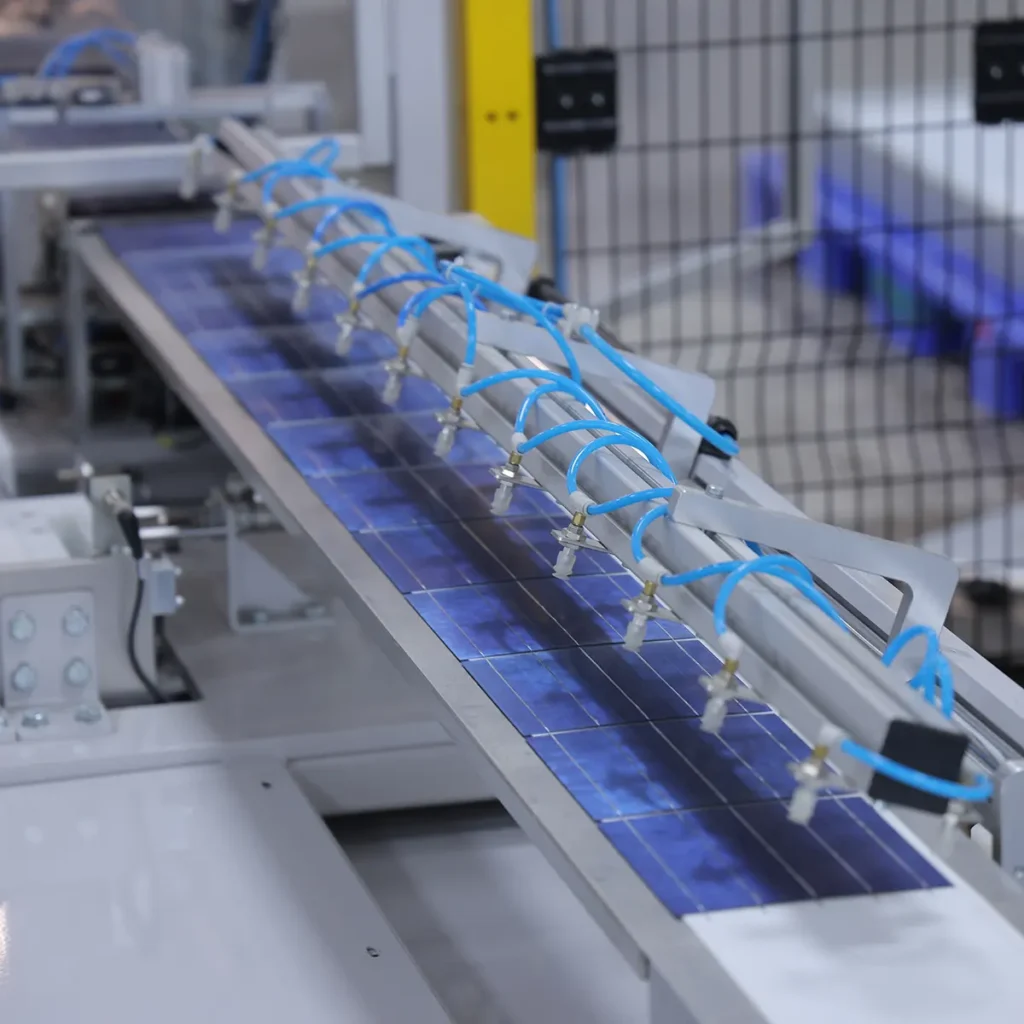
Advancements in manufacturing processes are pivotal for solar module manufacturers, reducing costs and expanding applications:
3D Printing: Enabling the production of custom-designed solar cells, a technique increasingly adopted by solar PV module manufacturers.
Roll-to-Roll Printing: A cost-effective mass production method embraced by solar manufacturing companies for efficient solar cell production.
Atomic Layer Deposition: Creating ultra-thin films, this method is gaining traction among solar module manufacturers for its efficiency and minimal waste.
Perovskite Inkjet Printing: Allowing direct printing of solar cells on various surfaces, expanding the potential applications for solar energy.
Smart Manufacturing: Digital technology is enhancing the production process, a trend quickly adopted by leading solar manufacturing companies.
Breakthroughs in Solar Panel Efficiency
Efficiency advancements are central to the mission of solar module manufacturers, seeking to make solar panels more eco-friendly and cost-effective:
Perovskite Solar Cells: With a 28.9% efficiency rate, these cells represent a significant leap, spearheaded by leading solar PV module manufacturers.
Multi-Junction Solar Cells: Achieving a 47.1% efficiency rate, these cells are at the forefront of research for solar module manufacturers.
Nanostructured Materials: Enhancing light absorption, these materials are a focus for solar manufacturing companies aiming for higher efficiency rates.

The Future of Solar Panel Technology
The future holds exciting prospects for solar energy:
Novel Materials: Graphene and perovskite are under intense research for their potential to revolutionize solar panels, a key interest for solar module manufacturers.
Advanced Manufacturing: 3D printing is being explored by solar PV module manufacturers for creating more efficient solar panels.
Integrated Solar Solutions: A growing trend among solar manufacturing companies, integrating solar panels into everyday infrastructure.
Energy Storage Technologies: Enhancing solar energy utilization, a crucial area for the advancement of solar module technology.

Future Directions for Solar Panel Technology
The roadmap for solar panel technology includes:
Material Innovations: Solar module manufacturers are exploring new materials like perovskite and advanced silicon variants.
Hybrid Panels: Combining different materials for optimal efficiency, a strategy adopted by leading solar PV module manufacturers.
Smart Solar Technology: The next generation of solar panels may feature integrated management systems, a focus for innovative solar manufacturing companies.
Enhanced Energy Storage: Advancements in battery technology are crucial for the future of solar energy, a key area for solar module manufacturers.
Large-Scale Solar Farms: A vision for supplying cities with renewable energy, a goal for leading solar manufacturing companies.

Wrapping Up:
Innovations in solar panel design and materials have catalyzed a paradigm shift in the solar energy industry. From the traditional silicon-based designs to the emerging perovskite and graphene technologies, each innovation represents a milestone for solar module manufacturers, including those specializing in solar PV modules in India. Future developments like hybrid panels, smart technologies, and advanced energy storage are setting the stage for a more sustainable and economically viable solar energy future. Despite the current investment challenges, the potential of solar energy remains boundless, with ongoing technological advancements promising a cleaner, greener world.