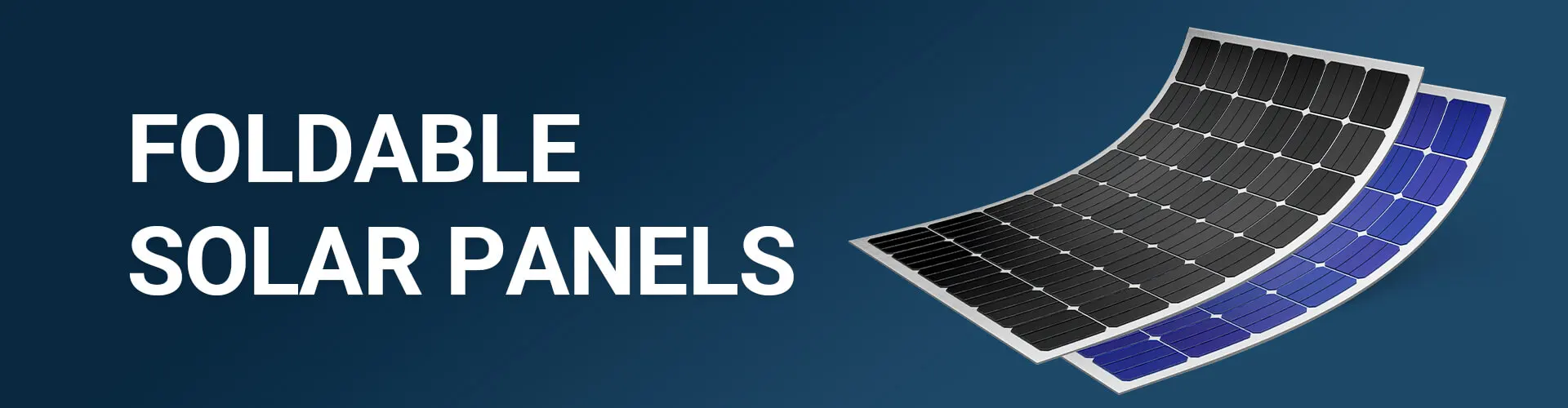
Foldable Solar Panels

Foldable Solar Panels

Perhaps you were mistaken if you assumed that solar panels were solely used in homes, businesses, and other public places.

You’ll be relieved to know that, owing to technical advancements, there are various solar panel variations that you may carry while camping or hiking to charge your devices. Foldable or portable solar panels are what they’re called.

You no longer have to be concerned about charging your phones or computers when they run out of power.

Sounds intriguing, doesn’t it? Let’s take a closer look at foldable solar panels.

What Is the Function of a Foldable Solar Panel?

A foldable solar panel, like a regular solar panel, converts the energy from the sun’s rays into electricity using a charge controller. To charge the device’s battery, this controller is connected to it.

You must assure that the solar panels face the sun and that direct sunlight falls on the panels. This will assist the panels in properly converting the energy and using it to charge your gadgets.

The Effectiveness of Foldable Solar Panels:

Now that you understand how it works, let’s look at the efficiency of a foldable solar panel.

If it’s a quality foldable panel, the efficiency will typically vary from 21.5% to 23.55%. You will be able to charge your solar panels during the peak hours of sunlight.

Different types of Foldable solar panels:

Let us now look into the various types of foldable or portable solar panels. A foldable solar panel is classified into three types: monocrystalline, polycrystalline, and thin film.

Mono-crystalline:

Let’s start with monocrystalline foldable solar panels. A single silicon crystal is used to make these solar panels.

As a result, they are more efficient than polycrystalline materials. They are also superior to thin film foldable solar panels. To Simply put, these solar panels produce more energy than the other two varieties.

Thin-Film:

As the name implies, these solar panels are thinner and less effective than the other two types.

Because of this, they are also the cheapest type. Amorphous silicon, cadmium telluride, and copper indium gallium selenide are among the materials used in thin film portable solar panels.

Poly-crystalline:

A polycrystalline foldable solar panel, unlike a monocrystalline panel, is blue. Because these panels are made up of numerous silicon crystal fragments, they are less efficient than monocrystalline modules.

The Benefits and Drawbacks of Purchasing a Foldable Solar Panel:

Before determining which one to purchase, you should be aware of the benefits and drawbacks of purchasing a foldable solar panel. Here are the three advantages:

  • It is portable, so you can take it with you.
  • Another advantage is that it is simple to grasp and attach to the gadget.
  • It features a very handy design that allows you to charge your gadgets anywhere you choose during the day.

However, there are some drawbacks. The following are some that should not be overlooked:

  • These solar panels cannot function when there is little sunlight. In other words, they require a sufficient amount of sunshine to generate energy.
  • These panels demand more time to charge than traditional charging modes.

A foldable solar panel is an incredible technology that has made it easier to transport solar energy while on the go. Solar power technology has advanced and gotten more sophisticated and lightweight, allowing panels to be utilised to charge any gadget.

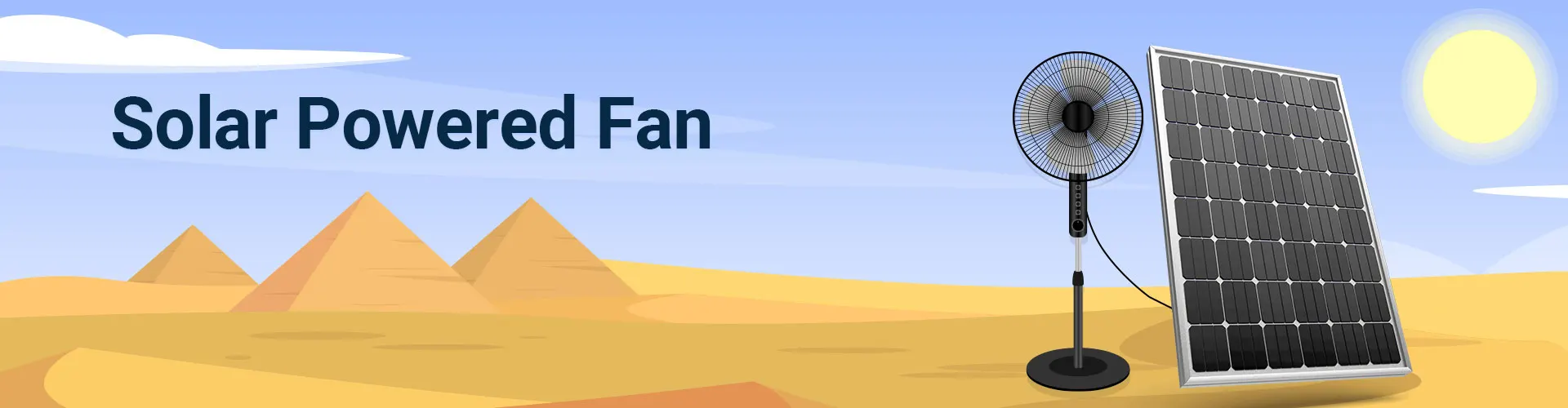
Solar Powered Fan

Solar Powered Fan

Blazing hot summer days can be too much!

Are you looking for a cost-effective and ecologically responsible solution? We’d definitely recommend a solar fan!.

What actually is Solar- Powered Fan?

A solar powered fan functions with the electricity generated by solar irradiance rather than conventional grid electricity. It’s a mechanical fan that’s powered by solar panels.

A solar panel fan operates on the same principle as solar lighting. The solar panels that power such products are either device-mounted or fixed as standalone installations.

When solar energy is utilised to cool a space during the day, the majority of solar fans don’t require a backup power source.

Additionally, a solar panel fan can be used for heating purposes. Notably, these devices operate the fastest when there’s extremely bright sunlight outside.

There are numerous solar-powered fans in the market, coming in a variety of forms and dimensions. However, they all utilise the same solar energy harvesting phenomenon.

What are different types of Solar-Powered Fans?

Let’s find out different solar fans that are offered in the market.

Solar Roof-Mounted or Ceiling Fans:

A rooftop solar fan positioned on the roof helps to reduce heat from the ceiling or attic.

Pedestal Solar Powered Fan:

Pedestal fans are now available as solar-powered fans. These are standing aids that come in a variety of sizes.

Desk Solar Fans:

These are medium-sized solar fans, similar to traditional desk fans. They do, however, operate in concert with mounted solar panels to provide power storage. Desk solar fans provide a significant amount of airflow with variable air speeds and orientations.

Floor Solar Fans:

In an emergency, a floor solar powered fan is ideal. These fans are typically equipped with an LED light bar. They are extremely useful during a power outage and can run continuously for eight hours.

Benefits of installing a solar-powered fan:-

  • Environment Friendly
  • Returns on Investment
  • Air-conditioning Cost Savings
  • No danger of electrical mishaps
  • Mobility

One of the biggest benefits of solar-powered fans is that they are very easy to install. Most solar fans come with a mounting kit, so you can easily attach them to your roof or wall. They are also very low maintenance, as they don’t have any moving parts that can break or wear out.

Overall, solar-powered fans are a great energy-efficient and environmentally friendly option for keeping your home or business cool. They are easy to install, low maintenance, and can help to reduce your energy bills and carbon footprint.

Solar Greenhouse

Solar Greenhouse

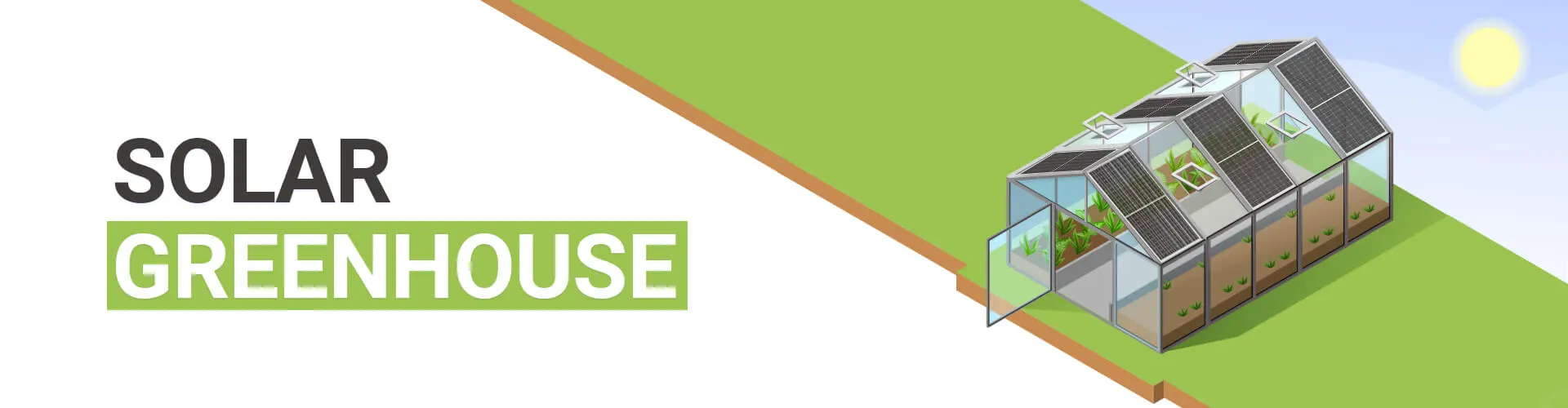
ALL ABOUT- SOLAR GREENHOUSE?

The sun is the ultimate energy source.

We’ve all heard this universal truth countless times in our lives. But what does it all mean?

It is self-evident that we must store and save the energy we receive from the sun, especially in today’s technologically advanced society.

Solar panels have long been used to harvest solar energy for homes and industry. But have you ever considered combining solar energy and farming?

Doesn’t that seem intriguing? It is possible with the assistance of a solar greenhouse.

Let’s learn more about solar greenhouses in depth!

What Actually Is A Solar Greenhouse?

To understand a solar energy greenhouse, we must first define what a greenhouse is.

A greenhouse is just a glass building used to cultivate plants in harsh weather conditions. A greenhouse’s climate can be controlled by absorbing light rather than utilising complicated and energy-intensive heating equipment. It aids in the growth of plants that demand a consistent temperature.

A solar energy greenhouse is a structure that contains solar panels. They gather the sun’s rays and convert it to heat. Even in adverse weather conditions, it provides the ideal habitat for plant growth.

The sun, without a doubt, provides all greenhouses with the required light for photosynthesis. A solar energy greenhouse, on the other hand, can help plants in the photosynthesis process by applying a light-altering dye or adding solar panels to the roof.

What Is the Difference Between a Solar Greenhouse and a Traditional Greenhouse?

A solar greenhouse is often a passive solar energy greenhouse.

The following are significant distinctions between solar and conventional greenhouses:

  • A conventional greenhouse heats the air at night or in the winter with propane, gas, or electricity. A passive solar energy greenhouse, on the other hand, makes use of sunlight.
  • A passive solar energy greenhouse, as compared to a traditional greenhouse, is powered by the sun and natural factors.
  • If necessary, a solar energy greenhouse can generate electricity to power appliances such as fans for cooling if it becomes too hot.

The Functioning of a Solar Greenhouse

Greenhouses employ the greenhouse effect to heat the structure. However, as previously said, a solar energy greenhouse is directed toward the sun.

A solar greenhouse has big south-facing windows. The black stone blocks on the north side absorb and retain sunlight.

Solar energy greenhouses, in other words, are glass-oriented to maximise solar energy. Natural ventilation lowers heat loss in the winter and reduces heat gain in the summer.

Merits of Solar Greenhouse:

Let us look at the several benefits of a solar-powered greenhouse.

  • A step toward sustainable living: One of the most important advantages of a solar energy greenhouse is that it is a renewable energy source. It contributes to the advancement of sustainable development.
  • Environmentally friendly: A solar energy greenhouse helps reduce traditional and hazardous greenhouse emissions. Greenhouse gas emissions are one of the most significant and major environmental issues. As a result, the value of solar energy greenhouse grows tenfold in this circumstance.
  • Cost-effective: Maintaining electric or natural gas-heated greenhouses can be costly. When using a solar energy greenhouse, though, a person will normally not have to worry about the electricity expense. After all, there is no charge for using the sun as a resource. You only have to pay for installation; maintenance is inexpensive.

Demerits of Solar Greenhouse:

We’ve heard about the various benefits of a solar energy greenhouse. However, there are a few minor drawbacks to be aware of before installing one.

  • Less efficiency when there is a cloud cover: When there is a cloud cover and rain, the efficiency of the solar greenhouse decreases.
  • Little Expensive: A solar energy greenhouse with solar panels is more expensive upfront. However, the expenditure is recouped in a matter of years. And the savings in electricity bills will last for decades.

Conclusion:

People are becoming more aware of the benefits of using renewable energy sources throughout time. We can now use the sun’s energy to power a solar greenhouse.

Tropical countries have high levels of solar insolation and ambient temperatures. This is why summer greenhouses can be created in locations where the inside temperature remains low and the plants receive adequate sunlight.

Because greenhouses can manage the light and temperature, they are increasingly used to grow vegetables and flowers all year. Some greenhouses are also designed to be water efficient.

Now that you understand how a solar greenhouse works, as well as its benefits and drawbacks, you can make an informed decision when installing one.


Why Perovskite Solar Cells Are The Future of Solar Power?

Why perovskite solar cells are the future of solar power?

Introduction:

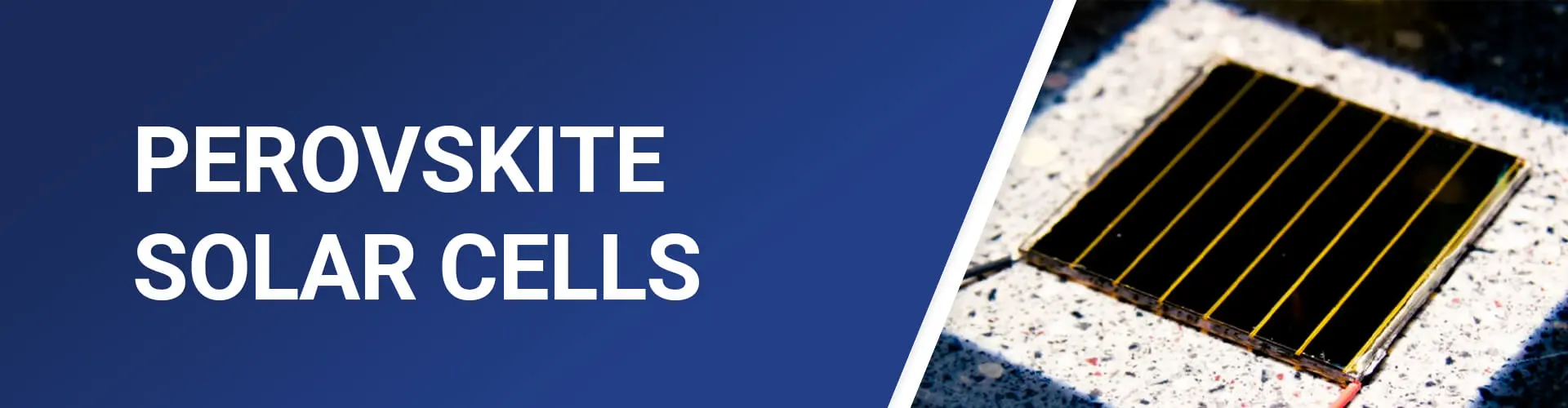
Perovskites, a category of materials at the cutting edge of scientific discovery and renewable energy development, have captured the imaginations of some of the world’s greatest scientists and engineers.

These extraordinary materials have the potential to generate more electricity from the sun than nearly anything else, and at a significantly cheaper cost than regular silicon solar cells. Perovskite solar cell research has come a long way in a short time, but there are still some significant obstacles to overcome.

Some perovskite products may be available in the market within the next year or two as a result of the efforts of many determined researchers, so it’s critical to learn about them now.

Although there has been considerable research and development in silicon solar cells over the past decades, their efficiency is incremental. In order to meet the world energy demands rising to 2030 and beyond, researchers are looking for disruptive alternative technology to conventional silicon photovoltaics. Solar cells are, in general, categorized into different generations based on the materials required for synthesis, applications, and commercialization.

First-generation silicon technology currently dominates the world photovoltaic market claiming ~90% of the installation. The best laboratory record power conversion efficiency (PCE) for silicon solar cells is ~26.7% for single solar cells and ~22% for modules. These devices are reliable as well as robust in nature. But they suffer from the drawbacks of the high cost of production as well as implementation into solar modules.

Second-generation solar cells involve primarily amorphous and thin-film technology such as amorphous silicon, gallium arsenide (GaAs), cadmium telluride (CdTe), copper indium (di) selenide (CIGS) with performance ~23% (NREL, 2020), and lower production costs. But the availability of materials makes them less attractive for large-scale production purposes. However, second-generation thin-film solar cells have a niche market in certain industries such as flexible electronics applications.

Third-generation solar cells which are based on nanostructured materials from low-cost manufacturing techniques have attracted more attention due to the simplified fabrication process, and availability of materials and hence, are cost-competitive. One of the prime candidates with a vertical increase in efficiency is the recently explored perovskite materials which have emerged as a promising alternative due to their cost-effectiveness and high efficiency.

Perovskites hold promise for creating solar panels that could be easily deposited onto most surfaces, including flexible and textured ones. These materials would also be lightweight, cheap to produce, and as efficient as today’s leading photovoltaic materials, which are mainly silicon.

Perovskites are a mineral of calcium titanium oxide CaTiO3 named after the Russian mineralogist Lev Perovskite. In practice, all crystals having structures of the form AMX3 are classified as perovskite materials. The ideal perovskite crystal structure is cubic.

General Working Principle of Perovskite Solar Cells

The perovskite layer absorbs sunlight and the energy in a photon is used to excite an electron. This absorption is manifested as an electron being excited from the valence band edge (or highest occupied molecular orbital, HOMO) of the perovskite sensitizer to its conduction band edge (or lowest unoccupied molecular orbital, LUMO) leaving the perovskite in an oxidized state which is neutralized by an electron moving from the HOMO of the adjacent hole transporting layer.

The electron excited to the LUMO of the perovskite is then injected into the LUMO of the ETL and is transported via diffusion to the front contact. The energy levels are thermodynamically aligned in such a way that when an electron from the valence band edge of the perovskite is excited to the conduction band edge, it leaves behind a hole in the perovskite, then another electron from the HOMO of the HTL can fill up its place.

Thus, an electric current is generated by the movement of electrons and holes in a hopping manner. The HTL allows the holes extracted from the perovskite layer to pass through and they are extracted into the external circuit. The HTL also functions as an electron blocking layer and prevents any electron from passing through. The important function of electron-hole charge separation thus occurs at the interfaces of different layers and the electrons and holes are transported through electron and hole-selective conductor layers respectively.

Structure of Perovskite Solar Cells

An archetypal PSC comprises an n-type compact layer, a mesoporous oxide layer, a light-harvesting perovskite layer, a hole-transporting layer, and two electrodes. The generic structure of a PSC and the different layers are deposited as indicated stepwise.

Step 1: The Fluorine doped Tin Oxide (FTO)/Indium doped Tin Oxide (ITO) coated glass, acts as the substrate for the photoanode of the perovskite device.

Step 2: Above it, there is a dense layer of semiconducting material, primarily TiO2, which functions as the hole-blocking layer or compact layer, deposited usually by spin-coating or spray-coating on top of the FTO substrate. It prevents the holes extracted by the electron-selective layer above from coming into contact with the FTO/ITO glass and inhibits recombination losses.

Step 3: Next is the ETL which facilitates diffusion of the electrons from the photoexcited perovskite layer into the FTO/ITO glass and thus to the external circuit.

Step 4: The perovskite layer which can act either as a sensitizer or absorber or as an electron or hole transporter, although its primary function is that of a sensitizer, is spin-coated over the electron transporting layer.

Step 5: Adjacent to the perovskite layer is the hole transport layer which allows the holes from the excited perovskite to move toward the metallic cathode for extraction.

Step 6: Finally, there is a metallic contact layer which is usually deposited by thermal vaporization on top of the solar cell to function as the counter electrode, also known as back contact.

Challenges and Problems With Perovskite Solar Cells

Though perovskite materials show promising results in terms of improvement in efficiency, they do suffer from some drawbacks which have retarded their commercialization. Since they are formed of organic cations, they are susceptible to moisture, temperature, UV radiation, and oxygen thus, deteriorating the performance of solar cells within a short time span. There are reports of maximum stability values of just over 1000 h.

Conclusion:

Perovskite solar cells are a type of photovoltaic cell that have shown great promise for use in solar panels. They have a number of advantages over traditional silicon solar cells, including lower cost, higher efficiency, and greater flexibility in their design and production. However, there are also challenges that need to be addressed, such as the stability and durability of perovskite cells over time. Research on perovskite solar cells is ongoing, and it is expected that they will play a significant role in the future of solar energy.
 

What You Should Know About Solar Radiation And Solar Flux

What You Should Know About Solar Radiation And Solar Flux

If you understand that solar energy can be an all-around answer for all of your electricity needs, you should also understand how it works.

Solar radiation, or simply sunshine, is an infinite source of energy. So, why not harness the sun’s energy and put a stop to soaring energy bills?

Many devices are capable of collecting solar radiation, calculating solar flux, and converting it into useable energy such as heat and electricity.

Do you know what solar flux is?

We have the answer.

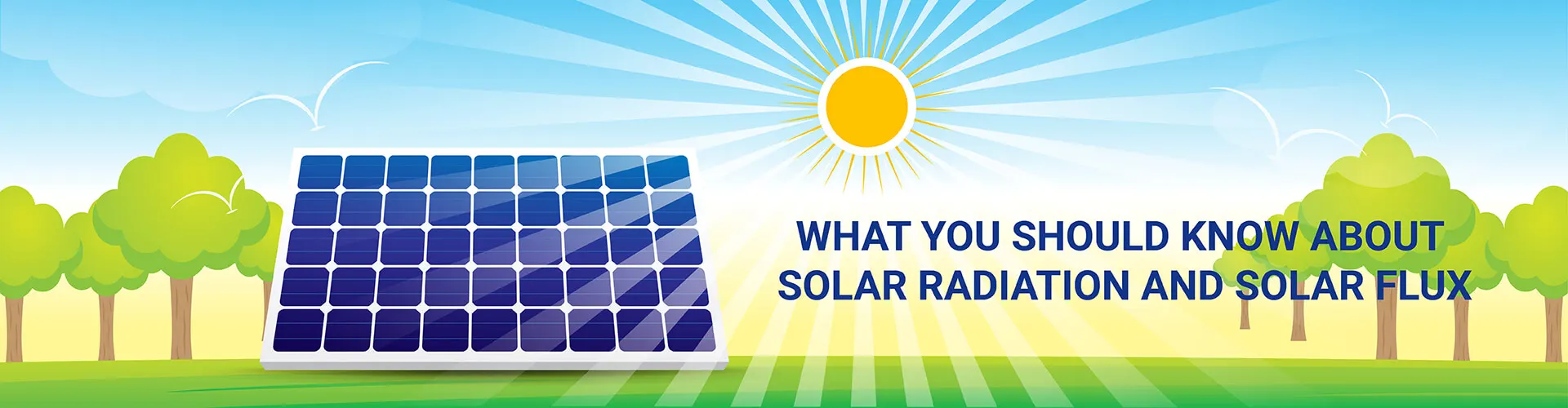
Solar flux is simply the amount of solar radiation in a particular location.

The technological viability and cost-effectiveness of solar energy-driven systems are heavily influenced by the installation location or the availability of solar radiation.

What Factors Influence Solar Radiation at a Specific Location?

The intensity of the sun’s rays at any given position is affected by the time of year, day, latitude, topography, and atmosphere. Clouds, dust, and water vapour, for example, all have an impact on the amount of solar radiation that hits your location at any given time.

When measuring solar flux, regional shades and shadows, such as those caused by trees or buildings, are ignored.

Types of Solar Radiations:

Now that you understand what solar radiation and solar flux are, let us look at the many types of solar radiation.

  • Direct
  • Diffuse

As sunlight travels through the atmosphere, some of it is absorbed, scattered, and reflected by:

– Clouds – Air particles – Water molecules – Dust Pollutants – Air-pollution calamities such as forest fires and volcanoes

These disruptions diminish the amount of natural solar flux, resulting in diffuse solar radiation.

Direct beam solar radiation is the type of solar energy that strikes the Earth’s surface directly. The total of diffuse and direct sun radiation is referred to as global solar radiation.

Solar PV’s Advantages and Limitations:

Solar cells, like everything else, have advantages and disadvantages. Solar photovoltaic systems have many advantages, but they also have certain drawbacks. Let us investigate both in terms of solar flux.

Benefits:

  • Because the sun’s rays constitute a key source of energy, there is no need to be concerned about a scarcity.
  • Solar radiation produces no CO2 emissions because it emits no contaminants.
  • Because solar radiation is everywhere, you can manufacture solar energy in a decentralized manner no matter where you are.
  • The use of modular solar PV technology expands the system size of the PV system as electricity demand grows.

Limitations:

  • Solar PV is frequently a cost-effective solution for delivering massive volumes of required power. However, the upfront cost can be challenging.
  • Weather, once again, can be a constraint. During the rainy season, the amount of solar flux decreases. As a result, the panels will generate less power.
  • The location could be an issue. Depending on your location, you may be able to access varied levels of solar radiation.

Conclusion:

Solar energy can be used to generate electricity by employing a solar panel, which absorbs solar radiation from the sun. There are several facets to this strategy, but harnessing solar radiation to reduce your energy consumption is a smart decision in general.

The Solar Furnace

The Solar Furnace

Working and its Applications

Introduction

A solar furnace is a device that concentrates and directs the sun’s radiation to generate high temperatures, typically used for industrial processes such as melting and refining metals, producing high-temperature heat for power generation, or for scientific and experimental purposes. It usually consists of a large array of mirrors or lenses that track the sun and focus its light onto a central target area, creating intense heat. The technology is based on the principle of solar thermal energy and requires a clear, sun-rich environment to operate effectively.

Types of Solar Furnaces

  • Central Tower:

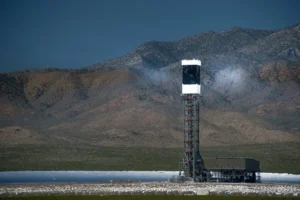
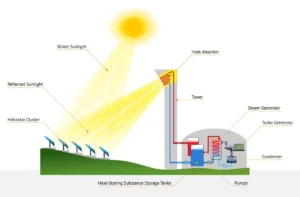
A central tower solar furnace uses a tall tower structure with an array of mirrors or heliostats that focus the sun’s radiation onto a central receiver at the top of the tower. The central receiver absorbs the heat and transfers it to a heat exchanger or energy storage system.

  • Parabolic Trough:

A parabolic trough solar furnace uses a series of parabolic mirrors or lenses that track the sun and focus its radiation onto a linear absorber located at the focus of the parabola. The absorber absorbs the heat and transfers it to a heat exchanger or energy storage system.

The Working

The basic working principle of a solar furnace is to concentrate and direct the sun’s radiation to generate high temperatures.

  • Tracking the Sun:

The solar furnace consists of an array of mirrors or lenses that track the sun and adjust their angle to keep the sun’s radiation focused on the target area.

  • Focusing the Sun’s Radiation: 

The mirrors or lenses focus the sun’s radiation onto a central target area, creating a concentrated heat source. The size and number of mirrors or lenses determine the amount of heat that can be generated.

  • Absorbing the Heat:

The central target area, typically referred to as the absorber, absorbs the heat generated by the focused sun’s radiation. This can be in the form of a receiver at the top of a central tower or a linear absorber located at the focus of a parabolic trough.

  • Transferring the Heat:

The heat absorbed by the absorber is transferred to a heat exchanger or energy storage system, where it can be used for industrial processes, scientific experiments, or power generation.

  • Cooling the Absorber:

To prevent damage or degradation, the absorber must be cooled to maintain its integrity and efficiency. This can be done using a cooling fluid or other means, depending on the design and application of the solar furnace.

Key features

  • High Temperature Generation:

Solar furnaces can generate extremely high temperatures, typically in the range of 1000-3000°C, making them ideal for industrial processes that require intense heat.

  • Renewable Energy:

Solar furnaces rely on renewable energy from the sun, making them a sustainable and environmentally friendly alternative to traditional fossil fuel-based heating methods.

  • Concentrated Heat:

The focused light of the sun creates a concentrated heat source, making solar furnaces highly efficient in terms of energy utilization.

  • Versatility:

Solar furnaces can be used for a wide range of applications, including melting and refining metals, producing high-temperature heat for power generation, or for scientific and experimental purposes.

  • Cost-Effective:

Solar furnaces can be cost-effective in the long run, especially in regions with high levels of sunshine and low electricity costs.

  • Automated

Tracking: Solar furnaces typically come equipped with automated tracking systems that adjust the mirrors or lenses to keep the sun’s radiation focused on the target area.

Solar Furnace : Pros & Cons

Pros of Solar Furnaces:

  • Renewable Energy Source:

Solar furnaces rely on renewable energy from the sun, reducing dependence on finite and potentially harmful fossil fuels.

  • High Efficiency:

Solar furnaces are highly efficient in terms of energy utilization, as they concentrate and focus the sun’s radiation to generate high temperatures.

  • Cost-Effective:

Solar furnaces can be cost-effective in the long run, especially in regions with high levels of sunshine and low electricity costs.

  • Environmentally Friendly:

Solar furnaces are a clean and sustainable alternative to traditional heating methods that generate pollutants and greenhouse gases.

  • Versatility:

Solar furnaces can be used for a wide range of industrial, scientific, and experimental purposes.

Cons of Solar Furnaces:

  • Initial Cost:

The upfront cost of installing a solar furnace can be high, making it less accessible to some industries or regions.

  • Weather Dependence:

The performance of a solar furnace can be affected by weather conditions, such as cloudy days or stormy weather, limiting its usability in regions with low levels of sunshine.

  • Maintenance Costs:

The maintenance costs of a solar furnace can be high, as it requires regular cleaning and upkeep to ensure its efficiency.

  • Technical Expertise:

The operation and maintenance of a solar furnace require specialized technical knowledge, making it a more complex option compared to other heating methods.

  • Limited Applications:

The high temperatures generated by a solar furnace may not be suitable for some industrial processes, making it a more specialized option for certain industries.

Conclusion

Solar furnaces are a highly efficient and sustainable alternative to traditional heating methods that use renewable energy from the sun to generate high temperatures. With its versatility and cost-effectiveness in regions with high levels of sunshine, solar furnaces can be used for a wide range of industrial, scientific, and experimental purposes. However, the upfront cost and maintenance costs of a solar furnace, as well as its dependence on weather conditions and technical expertise, can limit its accessibility and usability. Nevertheless, as technology and design improve, solar furnaces hold the potential to play a significant role in reducing our dependence on fossil fuels and promoting a more sustainable future.

Solar Roofing Sheet

Solar Roofing Sheet

One of the key reasons why more people are choosing for self-sustaining power generation systems is the rising cost of commercial electricity.

Although solar panels are a great way to generate electricity at home, many people are reluctant to add anything to their roofs. Furthermore, certain rooftops are not appropriate for the installation of solar panels.

So, what’s the answer? Solar roofing sheets are the answer.

However, before installing solar roofing, it is critical to choose the appropriate type of roof for your property. Furthermore, in order to make an informed selection, you must understand the benefits and drawbacks of installing solar roofing sheets.

The most typical questions that people have before investing in solar roofs are:

  • – Can solar roofs withstand the load of your home?
  • – Are they as long-lasting as traditional roofs?
  • – Are they as long-lasting as traditional roofs?

What actually are Solar Roofing Sheets?

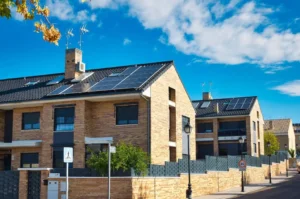
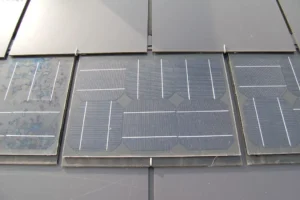
Solar roofs are highly durable and long-lasting roofing structures that generate electricity from sunlight. They are composed of PV materials and perform in the same way as traditional roofs. These roofs are commonly known as solar shingles.

Solar shingles come in a variety of styles. Let’s look at the most prevalent sorts that are accessible for home use.

Solar roofs are built of semiconductor materials such as copper-indium-gallium selenide and monocrystalline silicon. Solar roofs come in two varieties. They are –

  • Solar Tiles: These are solar panels that are roughly the size of traditional roofing tiles. They are good solutions for people who want to keep their home’s conventional appearance while generating solar power.


  • Building integrated solar panels: These solar roofing sheets have the same dimensions as solar panels and can be used on the roof and facade of a building. They provide an added benefit to individuals because they may be manufactured in a variety of colours to match the style and appearance of the house.

Benefits of installing solar roofing sheets:

One of the most major advantages of installing solar roofs is increased sunshine exposure. This is beneficial in terms of generating enough electricity for domestic use.

Aside from that, this solar power generating equipment has further benefits. These are some examples:

  • Heat Resistant: Solar roofing sheets offer superior protection because they are UV-resistant. Furthermore, because they utilise the majority of the sunshine to generate power, the interiors of the house remain cooler.
  • Similar to the cost of installing solar panels One of the most significant advantages of solar roofs is that they eliminate the requirement for two roof parts, namely a roof and solar panels.

The solar roof requires roughly the same expenditure as installing solar panels on an RCC roof or metallic sheet roof. This is one of the primary reasons why so many people believe in solar roofing sheets.

  • Enhance the Appearance of Your House: The aesthetics of the home are major factors that prevent many individuals from installing their own solar power system. Although correctly installed solar panels increase the visual value of a home, some individuals do not want to add to their roofs.

They give your home a trendy and sleek appearance. Furthermore, technological innovation provides humans with endless possibilities.

  • Highly Durable roofing sheets: Solar roofs are extremely durable and can endure severe weather and falling debris. Solar roofing sheets are practically a component of the roof and are as long-lasting as traditional roofs. They are also fire-resistant on top of everything else.

Drawbacks of Solar roofing sheets:

  • The supply is very limited.
  • Cannot be positioned at an angle like solar panels to create the most energy.-
  • In a Few Years, It Might Look Outdated
  • Installing solar shingles requires a large enough surface area to collect enough light to generate electricity.

Conclusion: Which is better: solar panels or solar roofing sheets?

Solar panels are good for generating electricity while minimising reliance on the commercial grid. Solar roofing sheets, on the other hand, function similarly to the roof itself. They provide exceptional security for your home while preserving its visual appeal.

WHAT IS A SOLAR COOLER? IS IT WORTH BUYING?

WHAT IS A SOLAR COOLER? IS IT WORTH BUYING?

The earth’s temperature has risen dramatically in recent years. Also, overheating and power outages are common, especially during the summer. Isn’t it relatable? This situation necessitates the installation of air conditioners. Nevertheless, typical air conditioners require commercial electricity, which degrades the environment.

So, what are your possible alternatives? A solar-powered cooler!

Yes! If you live in a hot temperature zone, you’re probably investing a lot of time and money building your home to minimise the effects of heat. A solar cooler saves you time and effort by utilising the vast sunlight captured by (for example) rooftop solar panels.

Sounds appealing! Isn’t that right?

Let’s look at the advantages of solar coolers and their various varieties one by one.

What actually is a Solar Cooler?

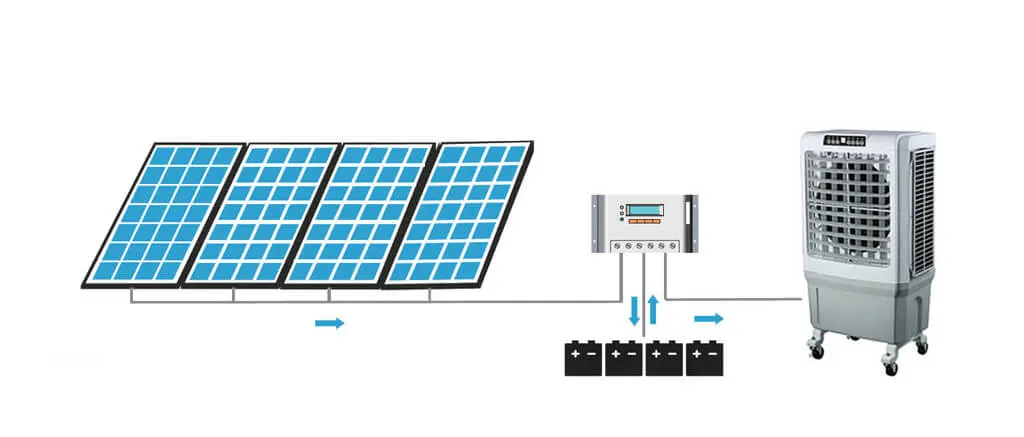
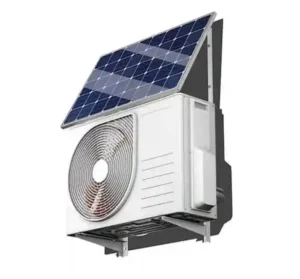
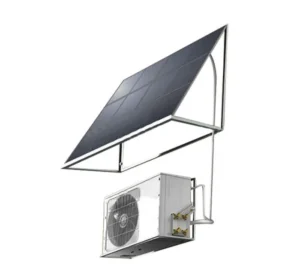
A solar cooler uses energy from solar panels to cool itself. They work in the same way as standard air conditioners do. They are, however, not powered by the commercial grid. These air conditioners are powered by one of three sources: a solar storage battery, solar panels, or network electricity.

Exploring the different types of Solar Cooler Systems

There are several types of solar air conditioners available for residential use. The three most prevalent types of solar cooler systems, however, are described below.

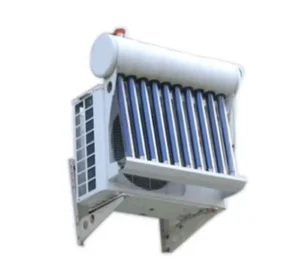
1. Solar thermal system

A plate is used in this type of solar cooler system to catch energy from the sun’s rays. This energy is then used to fuel the electric generator, which starts the compressor, which is in charge of the cooling process in air conditioners.

Although this system employs solar power for the majority of its cooling operations, it is losing popularity due to its low efficiency.

2. Solar PV Air Conditioners

This system collects solar energy via solar PV panels put on the rooftop of a residential structure. The solar energy system transforms this direct sunlight from the sun into useable electricity.

The solar air conditioner uses this electricity to produce cooling in the residence.

Some hybrid solar air conditioner systems connect to the commercial grid to supply sufficient electricity even in inclement weather.

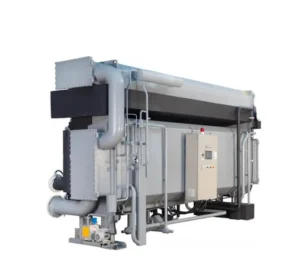
3. Absorption Chillers

The installed solar panels are used to power fans and compressor motors in this system. To produce cool air, these air conditioner components use evaporation and condensation processes.

Furthermore, this solar cooler can be powered by charged solar batteries.

The Efficiency of a Solar Cooler

Did you know that a solar-powered air conditioner can outperform a grid-powered air conditioner in terms of efficiency?

In reality, on hot bright days, solar panels receive the most sunshine, allowing them to create enough electricity to power a solar cooler. On gloomy days, solar batteries can offer enough power to power your solar air conditioner.

What Are the Advantages of Using a Solar Cooler?

There are numerous advantages to installing solar coolers, including increased sustainability, ease of maintenance, and reduced reliance on the power grid. These benefits outweigh the high solar air conditioner price.

Let’s explore these benefits in depth.

  • Solar coolers harness renewable energy from the sun. This minimises greenhouse gas emissions, which are prevalent during commercial energy production.
  • Rooftop solar panels that generate electricity for solar air conditioners require less maintenance. They provide excellent efficiency with only little repairs.
  • They rely on solar panels for power. It contributes to less reliance on fossil-fuel-based electricity. They also don’t have to pay exorbitant utility expenses for home cooling.

Conclusion:

Solar coolers are one of the most effective inventions for dealing with high heat. They also help to preserve the environment by lowering reliance on commercial grid systems.

Many people want to make their homes self-sufficient and energy efficient. If your energy usage is mostly due to house cooling, you should consider using solar air conditioners.

Have you ever heard of Anti-Solar Panels

Have you ever heard of Anti-Solar Panels?

A brief guide about anti-solar panels:

Technology is always evolving. Many brilliant minds and scientists are working tirelessly to identify as many alternative energy sources as possible in order to lessen human reliance on fossil fuels.

We’re not kidding when we say that darkness is one such source. An anti-solar panel is used in this revolutionary technique.

Intrigued? Surprised? We were as well, so what did we do? We dug extensively and discovered some amazing facts about anti-solar panels, their application, and much more. If you are concerned about the environment, you’d appreciate an anti-solar panel just as much as you do solar panels. Dig in because we have a lot to say!

So, What is Anti-Solar Panels?

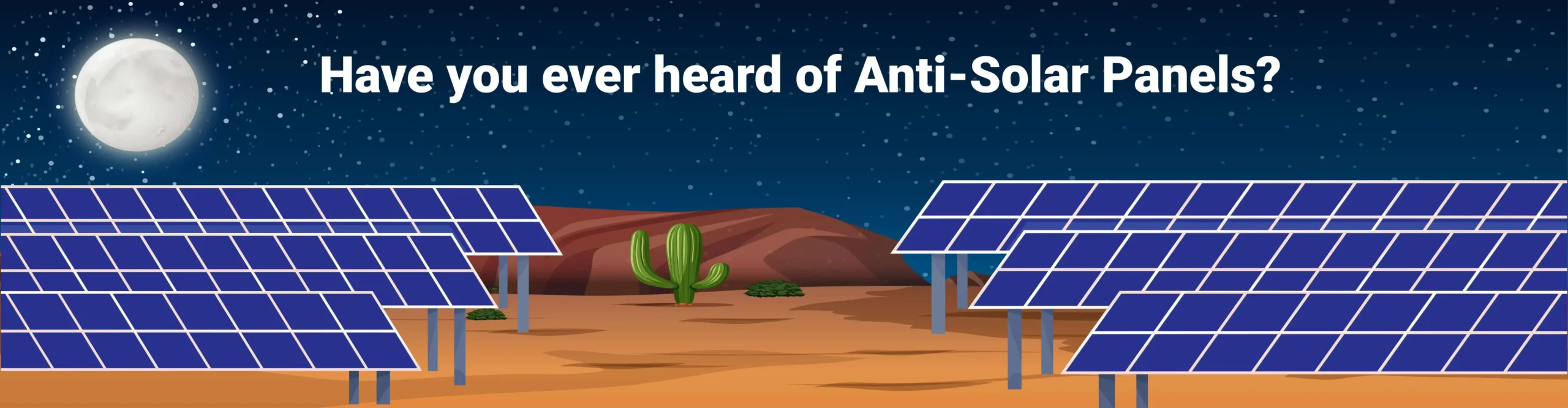
A power-generating device is indeed an anti-solar panel. It generates energy by efficiently utilising the temperature difference between the panel’s surface and the surrounding atmosphere.

During the day, conventional solar panels absorb sunlight because their temperature is lower than that of the sunrays.

In contrast, at night, the earth sends heat into space, which an anti-solar panel captures to generate useful electricity.

What is the Intriguing Technology Underpinning an Anti-Solar Panel?

Thermal radiation is used in an anti-solar panel. It works on the premise that a hotter object emits heat into its surroundings. Furthermore, this heat output is infrared radiation. We can confine the heat that a cold solar panel radiates into the surrounding environment if we install it on a relatively hot Earth. In addition, the solar panel converts this heat into a usable electric charge.

A thermoelectric generator is used to integrate and optimise the radiative cooling action of an anti-solar panel. This panel has one side exposed to surrounding temperature and the other in contact with an aluminium plate. The thermoelectric generator employs a passive cooling process to capture the temperature differential between Earth and the atmosphere. This aids in keeping the panel’s temperature down.

Infrared radiation is emitted by the aluminium plate facing the sky. This technique lowers the temperature of the solar plate by two degrees Celsius compared to the rest of the anti-solar panel. Also, the temperature of these regions is the same as that of the surrounding environment. The device’s emission of infrared rays accelerates the motion of current and voltage in an anti-solar panel. As a result, power is generated.

Furthermore, the device’s clear insulating panels isolate the aluminium plate from the ambient temperature. This prevents heat from passing through the device.

Yet, what distinguishes these solar panels from conventional solar panels? Let us comprehend with a table of comparisons!

Anti Solar Panel Vs Conventional Solar Panel:

Both anti-solar panels and conventional solar panels are viable choices for protecting the world. Surprisingly, people may be confused between the two.

Anti- Solar Panels Conventional Solar Panels
They generate electricity at night. They generate electricity during the day.
They generate power by utilising the temperature difference between the Earth and its surroundings. They absorb direct sunlight and then process it to generate power.
They are involved in the thermal radiative process. They are involved in the photovoltaic process.

What Are the Potential benefits of Anti-Solar Panels?

The most pressing need is for sustainable power generation. The greater the number of alternatives, the less reliance on fossil fuels.

Let us go through some of the most important advantages of anti-solar panels.

  • Under ideal conditions, anti-solar panels can provide usable energy throughout night.
  • They can be deployed in both industrial and residential environments to generate electricity.
  • They generate carbon-free energy to reduce pollution.

Anti-Solar Panel: The Future Of Renewable Energy

Anti-solar panels currently provide only a fraction of the power that a conventional solar panel does.

It is feasible that with time and technology, the efficiency of anti-solar panels will be able to match that of solar panels. These panels can produce power by retaining heat throughout the day, making them ideal for industrial applications. In general, industrial heat only raises the temperature of the atmosphere, which exacerbates atmospheric degradation. Anti-solar cells are an excellent way to harness this heat to generate power.

This technology will undoubtedly improve in the future.

Conclusion:

All of the advantages of the anti-solar system demonstrate that it might be a significant contribution to the sustainable power generating concept.

“While solar panels produce 250 W of electricity from one square meter of the panel, anti-solar panels seem to provide only 25 mW, which is very less. So, increasing the efficiency of anti-solar panels is a challenge”.

But, a technology that does not rely on the combustion of fossil fuels for our energy demands is worth investigating. The Planet gives us everything, and we should help to cure it by lowering carbon emissions on a tiny scale, and if we succeed, it will be a great pleasure for all of humanity.

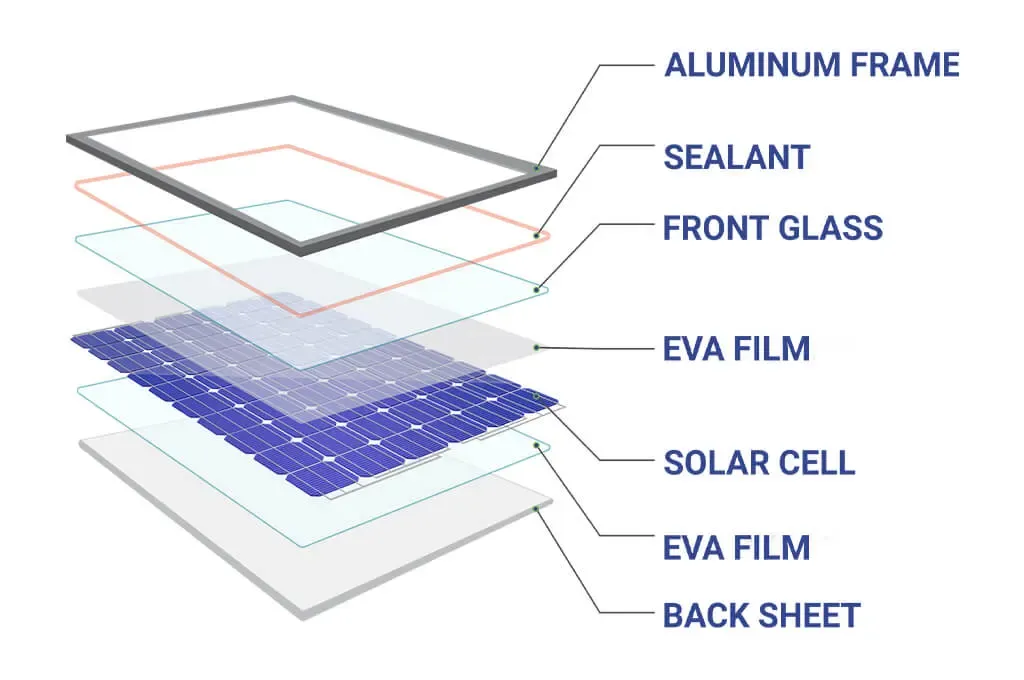
A Key Component in Solar PV Module – Encapsulant

A Key Component in Solar PV Module – Encapsulant

Solar photovoltaic (PV) modules are made up of several components that work together to convert sunlight into electrical energy. One of the key components of a solar PV module is the encapsulant, which plays several important roles in ensuring the longevity and efficiency of the module.

What is the encapsulant?

The encapsulant is a layer of polymer material that is used to protect the solar cells in a PV module from environmental factors such as moisture, dust, and temperature changes. It is typically made of ethylene-vinyl acetate (EVA), a material that has excellent adhesion properties and can withstand exposure to UV radiation and other environmental stresses.

Functions of the encapsulant in a solar PV module:

1. Protecting the solar cells

One of the primary functions of the encapsulant is to protect the solar cells in a PV module from damage caused by moisture, dust, and other environmental factors. The encapsulant forms a protective barrier around the cells, preventing water, dust, and other particles from penetrating and causing damage. This is especially important in harsh environments where the modules are exposed to extreme weather conditions.

2. Enhancing electrical performance

The encapsulant can also enhance the electrical performance of the PV module by improving the transmission of light to the solar cells. EVA has a refractive index that is similar to that of glass, which means that it can help to reduce the amount of light that is reflected off the surface of the module. This results in more light being transmitted to the solar cells, which can increase the overall efficiency of the module.

3. Improving module durability

The encapsulant can also help to improve the durability of the PV module by providing a stable and durable barrier that protects the cells from environmental stresses. EVA has excellent adhesion properties, which means that it can bond well with other materials in the module and provide a strong and stable structure. This can help to prevent damage to the cells and other components in the module, which can increase the lifespan of the module.

4. Reducing potential safety hazards

Another function of the encapsulant is to reduce potential safety hazards associated with solar PV modules. The encapsulant can help to prevent the cells from becoming dislodged or damaged, which can reduce the risk of electrical shock or fire hazards.

5. Maintains the electrical circuit’s integrity:

The Encapsulant protects the electric circuit, which creates the required current and voltage in the presence of sunlight.

6. Provides Good Adhesion:

The encapsulant material forms a strong bond with both the solar cells and the cover glass or back sheet, ensuring a long-lasting and durable connection.

7. Provides Good Thermal Stability:

The encapsulant material withstands the high temperatures generated by the solar cells during operation, without degrading or losing adhesion.

Conclusion:

The encapsulant is an essential component of a solar PV module that plays several important roles in ensuring the longevity and efficiency of the module. By protecting the solar cells, enhancing electrical performance, improving module durability, and reducing potential safety hazards, the encapsulant helps to ensure that the module can operate effectively and safely for many years.