An Integrated Solar Tower Troduces Carbon Free Jet Fuel

An integrated solar tower produces carbon-free jet fuel.

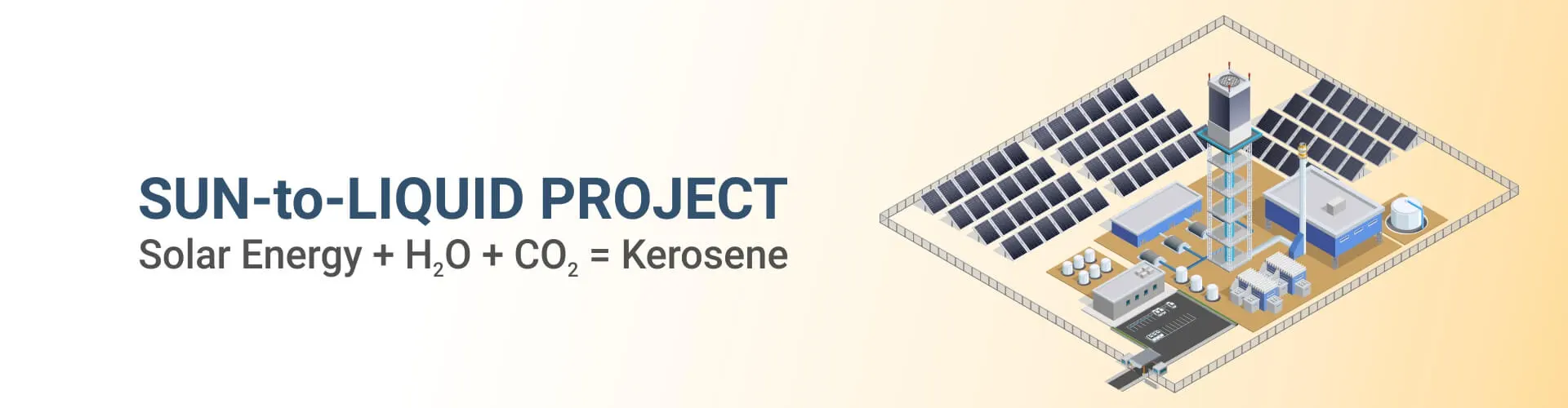
A mechanism for producing aviation fuel that employs water, carbon dioxide (CO2), and sunlight has been developed by researchers.

We are the first to show the entire thermochemical process chain in a fully integrated solar tower system, from water and CO2 to kerosene, claims Aldo Steinfeld, an ETH Zurich professor. The majority of prior efforts to create aviation fuels using solar energy were conducted in laboratories.

The global anthropogenic emissions causing climate change that are attributable to the aviation industry are around 5% of the total. Kerosene, also known as jet fuel, is a liquid hydrocarbon fuel that is primarily made from crude oil and is heavily used in it. On a worldwide scale, there isn’t currently a clean option for long-haul commercial aircraft.

“With the help of our solar technology, we have demonstrated that synthetic kerosene can be made using CO2 and water rather than fossil fuels. Kerosene combustion in a jet engine produces the same amount of CO2 as it does during production in a solar power plant “Says Steinfeld(The Researcher). That renders the fuel carbon neutral, particularly if CO2 directly absorbed from the air is added in the not-too-distant future.

Steinfeld and his colleagues have created a system that uses solar energy to create drop-in fuels, which are synthetic substitutes for fossil-derived fuels like kerosene and diesel. This system is a part of the European Union’s SUN-to-LIQUID project. According to Steinfeld, solar-produced kerosene is completely compatible with the current aviation infrastructure for fuel storage, delivery, and final application in jet engines. He says that it can also be combined with kerosene made from fossil sources.

The team began scalability testing in 2017 and constructed a solar fuel production facility at the IMDEA Energy Institute in Spain. A solar reactor located on top of a tower is heated by solar energy that is redirected and concentrated by 169 sun-tracking reflecting panels in the facility. Syngas is then delivered to a gas-to-liquid converter, where it is ultimately converted into liquid hydrocarbon fuels like kerosene and diesel.

According to Steinfeld, “This solar tower fuel factory was run with an industrial implementation configuration, setting a technological milestone towards the generation of sustainable aviation fuels.” his team is putting a lot of effort into refining the design to raise the efficiency to figures over 15%.

One of the Fascinating Solar Application Around the World

One of the Fascinating Solar Application Around the World

The Innovative Solar Powered Pesticide Control System

Numerous applications of solar energy exist around the world. There are some incomprehensible ways by innovators from throughout the world. The energy has been utilized by inventive minds in inconceivable ways, from solar-roofed bike lanes to solar paints, from solar-powered garments to solar cars.

One more intriguing solar energy use has been added to the list, and it comes from India’s top technological university: the Solar-powered Pest Control System from IIT Kharagpur.

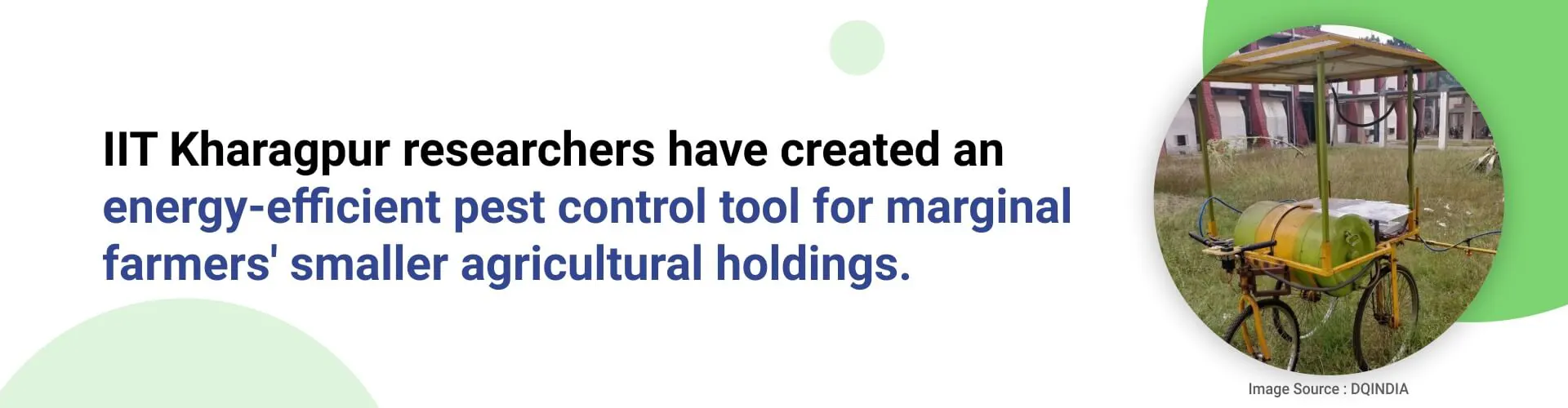
IIT Kharagpur researchers have created an energy-efficient pest control tool for marginal farmers’ smaller agricultural holdings. The research team has created a self-propelled boom-type sprayer that can be securely directed through the crops on smaller plots of land while being powered by solar energy.

The semi-automated device will address a number of issues with the mechanical pest management system in the small farm sector, according to Prof. Hifjur Raheman, Prof. Anup Behera Rahul K, and Prof. P.B.S. Bhadoria from the Dept. of Agricultural and Food Engineering at IIT Kharagpur.

The government is realigning its interventions from a production-centric approach to farmers’ income-centric initiatives, with a focus on better and new technological solutions, with the aim of improving the condition of Small and Marginal farmers and to double the income of farmers by 2022. “This is an open call to the technical institutions in India to deliver in the field of precision agricultural technologies.

It highlights how, with a little creativity, solar energy can be used to power any device or technology that we require. The success of such developments demonstrates the crucial part solar energy may play in lessening our reliance on fossil fuels.

We are confident that many more developments will soon be discovered that will alter the way we presently utilize energy.

An innovative solar investment concept- Digital Solar Biscuits

An innovative solar investment concept- Digital Solar Biscuits.

If I tell you that you may buy a piece of a solar power plant, will you trust me? You’ll say that I’m kidding. How is it possible to own a piece of a solar power plant?

Well, this was not feasible before to last year. However, the solar industry was just one of many things that were altered by COVID-19.

What is Solar Biscuit?

A unit of a section of a solar plant sold online that consumers can reserve is referred to as a “solar biscuit” or “digital solar.” When an organization or individual uses their biscuits to consume electricity, they can then receive returns or power dividends (known as credits). It is a novel approach to environmentally friendly investing that can help cut carbon emissions by promoting the use of solar power.

How did the need arise?

The fact that there would be many individuals who, wanted to adopt solar but were unable to do so and are now responsible for paying their electricity bills.

Even for the residential sector, metro areas have extremely high electricity costs. Therefore, if one does not have access to a rooftop, can one adopt solar energy or reap its benefits?

How are Solar biscuits useful?

Simply decide how many solar biscuits you’ll need to offset your energy costs. As a result, every unit of power produced using them earns energy credits. You are only required to pay the remaining balance, if any, after using these credits to pay your electricity bills.

Solar Biscuits make renewable energy simpler by sparing utility drivers the trouble of setup, use, and maintenance, while also enhancing flexibility and scalability in accordance with business requirements. Based on a predetermined rate of return, they create a framework for converting their solar assets into transferrable power dividends.

Digital solar has the ability to shift the way we think about green energy. Given the acceptance and success of decentralized forms of money and assets, such as cryptocurrencies and NFTs, decentralizing solar energy and converting it into a digital asset not only makes sense but is also a progressive and forward-thinking suggestion.

EVA Sheet: A Key Component of a Solar Module

EVA Sheet: A Key Component of a Solar Module

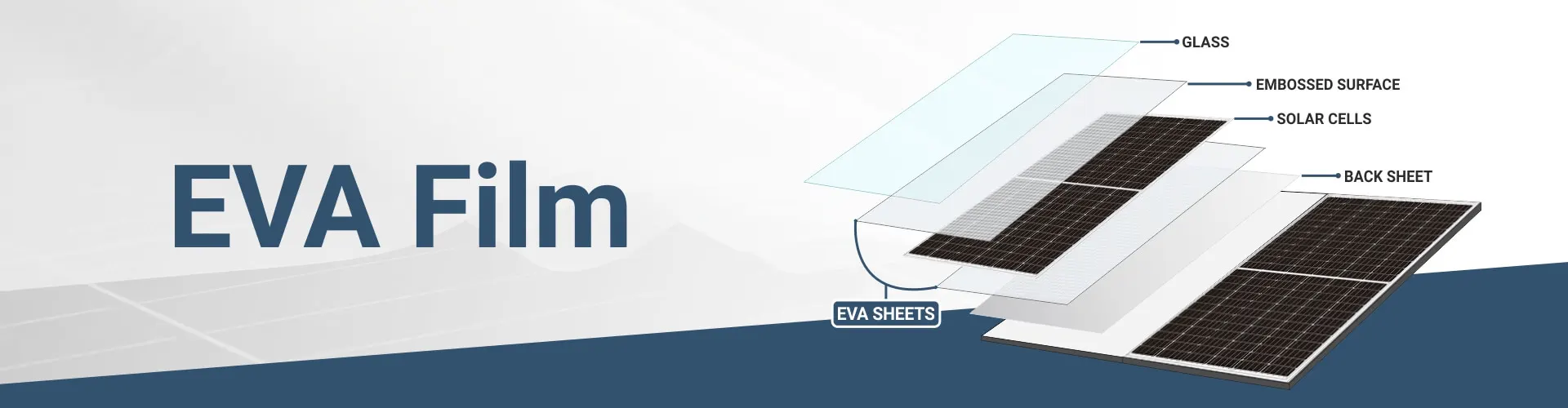
A solar module is made up of many parts that safeguard or extend the life of the solar cells in addition to the solar cells themselves. A basic module is made up of a glass sheet, a frame around the edges, and an EVA sheet over the solar cells. Afterward, a tough and long-lasting EVA sheet is used to cover the cells’ lower side once more. Back sheet completely encloses it.

Moisture, oxygen, and the environment can all damage solar cells. A solar module’s EVA stops air and moisture from getting to the solar cells and deteriorating them. The solar cells will deteriorate over time and stop producing electricity if they are not covered.

What are EVA Films?

Ethylene vinyl acetate is a thermoplastic polymer with low photo-degradability and high radiation transmission. It is utilised in the photovoltaic (PV) sector as a crystalline silicon solar cell encapsulation material in the production of PV modules. Solar EVA Film provides long-lasting protection for solar panels with minimal performance degradation.

A rubbery material with a milky white colour makes up a Solar EVA sheet. It transforms into a clear protective layer when heated, sealing and insulating the solar cell. The cells are laminated between films of EVA with the aid of a lamination machine in a vacuum that is compressed at temperatures of up to 150 C.

EVA Film Properties:

  • Durability

Quality EVA film is renowned for its outstanding endurance, even under challenging environmental conditions like high temperatures and high humidity.

  • Bonding

EVA film will have great adhesive adhesion to solar glass under the correct conditions (NOT standard glass, solar glass has a rough surface). EVA also adheres to the backsheet extremely effectively.

  • Optical

Excellent transparency is a hallmark of EVA. This indicates that the optical transmission is satisfactory and does not significantly obstruct the sunlight trying to reach the solar cells. These days, a number of Asian producers use a translucent backing, which results in transparency between the cells. Semi-transparent modules are this kind of module.

Conclusion:

Despite some of the long-term dependability issues we have raised, EVA has a long history of being the most used encapsulant material for PV modules. This is due to the fact that it offers a cost-effective solution that satisfies requirements for mechanical strength, weather resistance, and stability set by the industry.

The present market trend demonstrates that the majority of businesses continue to employ EVA as their encapsulant material. However, it is exciting to see that some companies have already started using POE and EMA as viable EVA alternatives in their solar modules.

PIXON EVA Film:

PIXON, one of the topmost solar EVA film manufacturers makes highly robust films for long-lasting and efficient performance of the solar modules. PIXON has 1 GW turnkey manufacturing capacity for EVA films. With higher productivity and lower shrinkages, our EVA films ensure that the solar cells are protected and solar modules provide better performance even while facing utmost harsh weather conditions. EVA films are also preferred because of their ease of lamination.

How to avoid solar panels scams

How to avoid solar panels scams:

Nobody wants to be defrauded.

In addition to spam-filled email inboxes and the more recent practise of sending us junk via text message, fraudulent calls are currently driving us all insane.

Yes, scammers are widespread these days, particularly in the home remodelling sector. The last thing you want to happen while working on a home repair or remodelling project is to fall victim to fraud.

Scams involving solar panels can appear out of nowhere, and if you’re not working with a reputable solar installation, you run the risk of losing your hard-earned cash.

Learn more about such residential and commercial scams mentioned below:-

Lack of contract:

If a solar firm approaches you with a project without asking for permission to put it on paper, you should be concerned because this is a scam tactic that won’t hold the company liable if they don’t do the job properly. In the event of an injury sustained on the job, it is also a very risky legal risk. You could be held liable if an accident happens while the installation is being done. Make sure a firm contract is in place and that all parties are in agreement before beginning any solar panel installation project.

Telemarketing:

If done properly, telemarketing is entirely legal, but it’s a good idea to be informed of what constitutes telemarketing techniques so you can decide whether you feel comfortable chatting with the person you are interacting with.

Consumers are frequently contacted by telemarketing companies to determine their interest in solar energy. If you indicate that you are interested, your information may be sold to solar retail businesses so that they may get in touch with you to close a deal.

Social media:

There are more businesses today trying to contact customers by running advertisements on social media platforms. Once more, dishonest businesses can readily advertise on social platforms just like well-known businesses.

Pretending to be an official from a government agency or a company:

If a “State Representative” or other official-sounding utility company employee knocks on your door and asks to meet with you about installing solar on your property, be cautious.

How to prevent solar scam:

  • Always make an independent call to the organization directly at the number published in the phone book or on their website to confirm their identification if you have been approached by a salesperson or organization and you are unsure. Additionally, look up online company reviews.
  • For additional information on avoiding scams, go to the SCAMwatch website of the federal government. To stop receiving telemarketers’ calls, you can also register your phone number with the Do Not Call Register.
  • Some solar scammers make the bold claim that they will replace your old solar panels with brand-new ones at no cost to you. Be wary of offers like these because you might be exchanging your high-quality panels for a subpar, low-quality substitute. The “free” panels are probably going to be inexpensive and low quality.

You can take a number of precautions to help safeguard yourself against solar energy frauds.

Do not, first and foremost, succumb to high-pressure sales techniques. Don’t sign anything right away if you feel rushed or under pressure. Before agreeing to anything, take the time to do your research.

You should also read customer reviews posted online. Pay attention to what is said in these reviews regarding the discrepancy between the salespeople’s claims and what the customers really experienced.


My Solar System Has Been Installed… What Happens Next?

My Solar System Has Been Installed… What Happens Next?

You switched to solar power! Spend a minute admiring your roof’s brand-new, glossy panels and checking out your inverter’s active operation.

What comes after that? Don’t worry, though. But to get you going, consider the following advice.

For the next 25 years or more, solar panels are a terrific investment that will give you access to low-cost, renewable solar energy.

How do you keep them up, though, is a crucial point. Are solar panels like your car in that they need frequent maintenance to function at their best? Or should you just leave them alone?

Can you keep an eye on the functioning of your solar panels?

You can keep an eye on the energy output of your panels using an app. Lower energy output could indicate that your panels are blocked from producing their usual quantity of electricity by anything like debris.

You can keep track of the quantity of energy your solar panels generate each day as well as their overall production by incorporating a monitoring system for solar panels into your setup. This enables you to observe precisely how various outside conditions affect the performance of your panels and how well they hold their efficiency over the course of their lifetime. In order for you to fix or replace a panel if it breaks or malfunctions, the monitoring system will also notify you.

How are solar panels maintained?

You’re in luck if your panels are tilted since rain will actually wash any buildup of debris off of them. However, it’s crucial to physically clean them during the dry season or prolonged dry spells.

It is typically advised that you clean your solar panels two to four times a year.

Use a spray and a soft-bristle broom to clean the panels. No scouring, no chemicals. An anti-reflective coating on solar panels can be easily removed with soap and water.

It’s crucial to remember that when removing snow from the panels, you should never use hot water. The high temperature difference between the hot water and the cold panels can break the tempered glass panels, which are the material of the panels.

Do rooftop versus ground-mounted solar panels require different maintenance?

The only true difference between ground-mounted solar systems and rooftop solar systems in terms of maintenance is that ground panels are simpler to reach and, thus, simpler to keep clean. You may easily remove any accumulation of snow or other debris by using a broom with a soft bristle.

Methods for repairing or replacing solar panels:

It is recommended to employ a professional to replace or repair your panels.

Call the firm that installed your panels if they are losing efficiency and are still covered by a performance or power output warranty. Someone will be dispatched to the scene to evaluate the situation and either repair the issue or replace the panels.

If there is physical harm to your panels, it is frequently covered by a different equipment guarantee. In order to determine who can best replace those panels, you can consult with your solar installer. In either case, unless you have previous experience with residential solar systems, avoid attempting to install solar panels or make repairs yourself.

So, are solar panels, therefore challenging to maintain?

Overall, it’s not too difficult to maintain your solar panels. Your panels will function well if you quickly clean any accumulated snow, dust, or debris. Make sure the panels you purchase have a solid warranty as well so that if they break, they can be replaced.

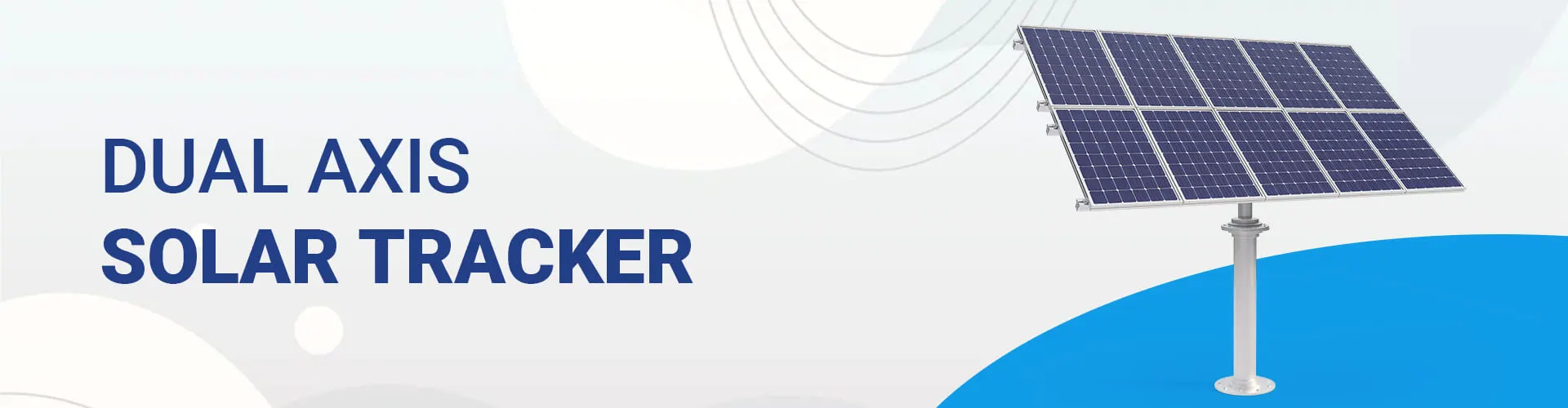
Dual Axis Solar Tracker: What Is It?

DUAL AXIS SOLAR TRACKER: WHAT IS IT?

Have you ever considered the more effective way that enormous solar plants can generate electricity?

Well, a solar tracker, as the name implies, is to blame. How do they operate, though?

A solar tracker, as the name suggests, tracks the sun’s path and reorients the direction of the solar panels accordingly. This method aids in capturing the most sunlight possible for massive electricity production.

Single-axis solar trackers and dual-axis solar trackers are the two categories into which solar trackers fall. These two categories differ significantly from one another.

Let’s first understand what a dual-axis solar tracker is and how it functions.

What actually is Dual Axis Solar Tracker?

To ensure that the solar panels receive direct sunshine, a dual-axis tracker rotates them from East to West and North to South. However, you must be wondering how can this occur?

The primary axis and secondary axis, which are present in this tracker, allow for convenient movement of the solar panels in all directions.

The device’s ability to generate over 40% more power than a fixed solar panel is its most alluring feature. Stunning, isn’t it?

How a Dual Axis Solar Tracker Works?

A flexible base is essential for the solar panels to remain perpendicular to the sun because the sun’s position changes throughout the day.

An auto-light tracking control system that is incorporated into a dual axis solar tracker allows for the unrestricted movement of the panels.

In order to automatically track the sun, the solar tracker’s signal processing units, mechanical and electromagnetic motion controllers, power supply system, light sensors, PLC, and PV cells work together.

Conclusion:

When considering the dual axis solar tracker’s features and operations, we can conclude that it is a very sophisticated device for boosting solar panels’ efficiency.

The best way to increase electricity production throughout the day is with them. The high cost of solar systems with twin sun trackers is quickly offset by the high energy production.

The dual-axis solar tracker was developed as a result of solar energy’s rising acceptance and dependence.

Dual-axis trackers are also anticipated to boost the output of solar panels, which would further encourage more people to utilize them.


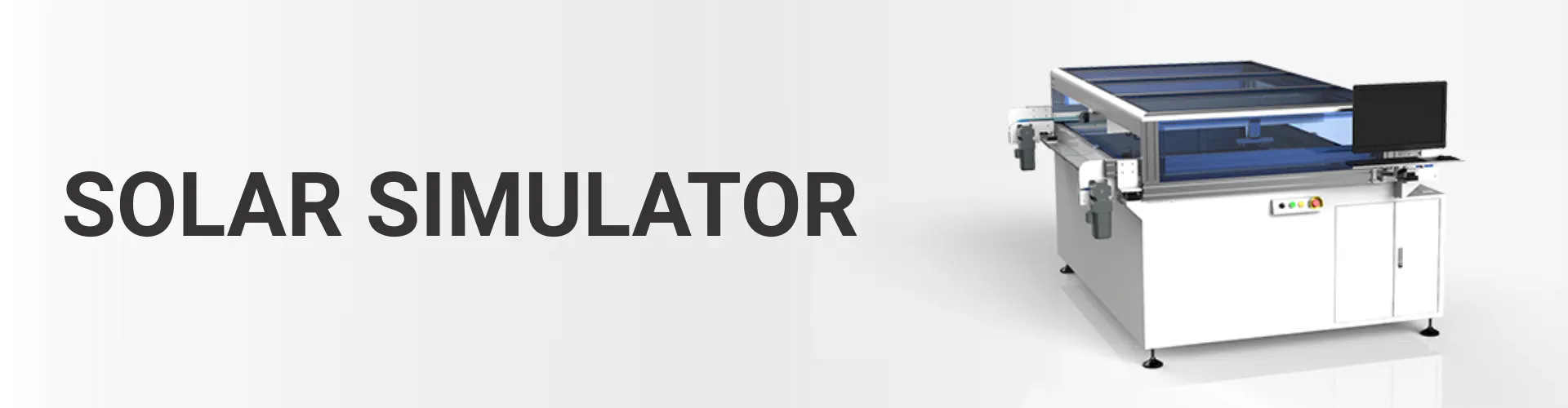
Solar Simulator

Solar Simulator

Since the 19th century, when scientists first discovered the effects of UV radiation, testing for it has been done. This unique feature will get you intrigued about technology.

When you work in an industry that is so reliant on the sun, it’s important to understand how we can simulate that light in order to optimize the performance of solar panels. The solar simulators are specifically designed to help engineers test and calibrate their solar panel designs before they ever hit production.

Now, you might be wondering what an actual Solar Simulator Is?

An artificial light source that replicates natural sunlight in terms of intensity and spectral composition is called a solar simulator.

Those are important for product testing and research procedures using or affected by sunlight

– such as solar fuels, polymers, sunscreens, and cells other photosensitive materials, including coatings.

The different types of solar simulators are as follows:

Continous or Steady solar Simulators – A light source of the continuous type provides continuous illumination over time. For low intensity testing of one or up to multiple suns, this sort of instrument is most frequently employed.

Pulsed or Flashed Solar Simulator – Pulsed systems are the second kind. This simulator can produce flashes or pulses with typical durations of a few milliseconds and extremely high intensities up to several thousand suns.

What Precise Purposes Can Solar Simulation Serve?

Solar simulators are frequently employed for controlled laboratory testing of solar cells, sunscreens, plastics, sunlight-sensitive gadgets, and other materials.

If you need to learn anything about the sun, you can utilize a solar simulator.

A particular phenomenon that is fueled by light (photons), example in:

  • Photobiology
  • Photooxidation
  • Photodegradation
  • Photovoltaics
  • Photocatalysis
  • Sunscreens

Class AAA Standards for Sun Simulator:

The regular maintenance and management of your light source will enhance the outcomes of your experiments, whether you’re utilising it for photovoltaic characterisation, photochemistry tests, or environmental testing. The word “Class AAA” classification will frequently appear when looking for a solar simulator, but what does it actually mean? If you’re unsure of what that is or how it relates to your research, we can elaborate that for you.

The criteria used to assess the calibre and precision of a solar simulator device’s illumination are specified by regulatory bodies including ASTM, IEC, and JIS.

The abbreviation “Class AAA” stands for three different standards requirements: Class A Spectral Match, Class A Spatial Uniformity, and Class A Temporal Stability.

Class A Spectral Match:

The degree to which the output of a solar simulator accurately matches a target spectrum is known as the spectral match. It is assessed using the quantity when the light produced within particular wavelength bands contrasts with the expected spectra, the difference is known as a “spectral mismatch.”.

Class A Spatial Uniformity:

The distribution and consistency of irradiance throughout a space are referred to as spatial uniformity. The parameter is known as “Spatial non-uniformity”.

Class A Temporal Stability:

The constancy of light output over time is known as temporal stability. It requires that the output light be stable over time in order to ensure that the lamp fluctuations do not

distort the measurement of solar cell efficiency.

Conclusion:

Before reading this article, if you were not familiar with the term “solar simulator,” hopefully you are now. A solar simulator is used to examine the wavelength and irradiance of the sun.

Solar simulation’s primary goal is to provide lighting that closely resembles natural sunshine in order to give a regulated indoor test facility under controlled lab circumstances.

Therefore, if you are conducting any type of research that involves sunlight, such as investigating photovoltaic solar panels to harness the sun’s energy or creating better sunscreen to protect humans from the sun, investing in superior solar simulation technology for accurate measurement is necessary.

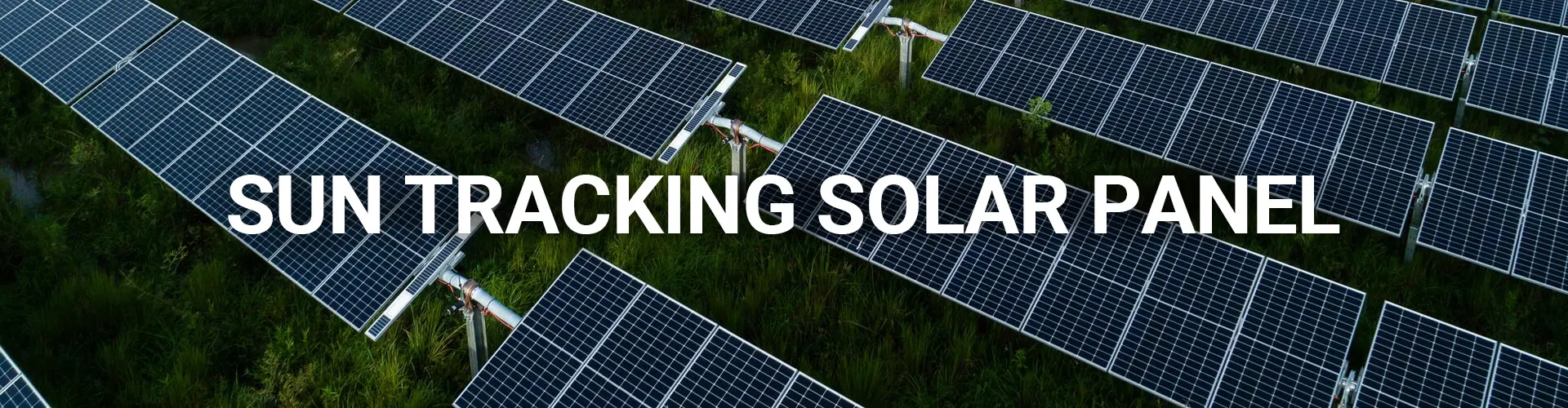
Sun Tracking Solar Panel

Sun Tracking Solar Panel

Want to know about a solar panel that tracks the sun? Everything you need to know about this device will be covered in this blog. But first, let’s examine the function of a solar panel.

The energy from the sun is captured by a solar panel and transformed into useable energy. The sole difference between a sun-tracking solar panel and a regular solar panel is that a sun-tracking solar panel typically assists the device in the direction of the sun.

The energy from the sun is tracked on the X or Y axes by a sun tracking solar panel. They do not maintain a stable angle, in contrast to static solar panels. As an alternative, they change their positions in response to the sun’s light. Doesn’t this sound amazing?

What is Sun Tracking Solar Panels?

A sun tracking solar panel is also a solar energy optimisation solution that can draw the maximum energy possible from the sun.

To produce the most power, these solar panels can be bent or tilted in both the vertical and horizontal directions. Also,the two sides of these solar panels, which are also accessible, each can provide the maximum power.It is a useful invention in the solar sector for capturing the sun’s greatest energy output.

Types of Sun tracking solar panels:

Now let’s discuss the two basic categories of solar panels that follow the sun: single-axis trackers and dual-axis trackers.

Let’s examine these trackers in greater detail:

  • Single axis tracker – Throughout the day, this tracker moves from east to west in the general direction of the sun. A single-axis tracker on a two-sided solar panel that tracks the sun produces 35% more electricity than static modules.
  • Dual axis tracker – However, this tracker travels from north to south and from east to west. A dual-axis tracker and a two-sided sun tracking solar panel may produce 40% more power than static solar panels.

Sun-tracking solar panels outperform static solar panels in terms of efficiency. However, these tracking devices are expensive than static solar panels.

Benefits of Sun tracking solar panels:

  • These solar panels are unrivalled in efficiency and absorb more sunlight than others, as was previously mentioned.
  • It can give you enough power to run your appliances. Consequently, you won’t need a lot of fossil fuel-based electricity to power your equipment.
  • It requires the least amount of area while producing the best energy production
  • They are useful for both small and large solar projects because to their great efficiency.

Demerits of Sun Tracking Solar panels:

  • Compared to stationary solar panels, sun-tracking solar panels have a shorter warranty period.
  • Fixed solar panels last longer than sun-tracking solar panels in terms of durability.
  • For the sun tracking panels to last as long as possible, the components might need to be replaced after a while.
  • These solar panels degrade quickly in comparison to static solar panels.

Solar panels with sun tracking technology have been developed to maximise the output of each solar panel. Undoubtedly, sun-tracking solar panels have made it simpler to harvest the sun’s energy at a particular moment. Additionally, they are the best in terms of efficiency. They are expensive, but for excellent reasons.

Before deciding on your solar module, be sure to weigh the benefits and drawbacks.

Gujarat Solar Policy

Gujarat Solar Policy:

The Gujarat (State) government has implemented a number of legislative steps to lessen the effects of climate change, which it recognises are becoming more pronounced at both the local and national levels.

Due to its geography, the State offers a substantial potential for solar energy resources and has already seen the development of both large-scale and distributed solar PV systems. Over 3,200 MW of solar PV systems have been deployed by the State since the launch of solar energy in 2009 and its revisions in 2015 and 2019. These installations will last through 2020.

The State plans to speed the adoption of solar power by implementing large-scale projects, small-scale distributed systems, and the creation of ultra mega solar parks in order to match with India’s ambitious solar PV capacity expansion programme. By implementing new mechanisms that serve customers, companies, and industry developers, these goals will be met.

The aim of Gujarat’s solar energy policy:

The State aspires to achieve its sustainable development objectives by promoting solar energy development in a way that would position it as an established source of energy supply and a major contributor to the national goal of 100 GW of solar capacity by 2022 as part of India’s Global Commitment.

Objectives of the Gujarat’s solar power policy:

  • Boost the state’s solar energy capacity significantly.
  • In order to decrease reliance on fossil fuels and increase energy security
  • To advance Gujarat’s Sustainable Development Goals (SDG).
  • To strengthen professionals’ fundamental technical skills by encouraging research, development, deployment, and innovation in the solar energy industry.
  • To raise knowledge of solar power technologies among all the electricity consumers.
  • To foster an environment that encourages investment
  • Promotion of nearby manufacturing facilities, employment creation and skill development.

Gujarat’s Solar Subsidy Scheme:

According to the approval of Gujarat Urja Vikas Nigam Ltd. (GUVNL), The Nodal Agency carried out implementing the MNRE’s Phase-II Grid Connected Rooftop Solar Scheme and Residential Rooftop Solar Subsidy Plot (Surya Gujarat Scheme) in the Gujarat State.

During the month of February 2022, MGVCL (Madhya Gujarat Vij Company Ltd.), one of Gujarat’s DisComs, floated tenders for qualified bidders to participate in the Request for Selection (RFS) of empanelment of sellers (EoV or EoI) for Site Survey, Plan, Installation, Supply, Erection, Testing and Commissioning including Warranty and 5 years of Comprehensive Operation and Maintenance of Roof Top Solar PV Power Systems for Residential Customers of Urban Area and Rural Area in the territory of Gujarat.

The Residential Rooftop Solar Subsidy is administered in accordance with the Ministry of New and Sustainable Energy’s (MNRE) Operational Guidelines for the Execution of Phase-II (RTS Stage II) of the Grid Connected Rooftop Solar Program with a combined goal of 40 GW (40,000 MW) by the end of FY’2022, with 4 GW (4000 MW) for Residential Rooftop installations or, alternatively, for Residential Sector.

MGVCL / GUVNL Tender, Surya Gujarat Solar RoofTop Phase II Program Highlights:

MGVCL conducted two separate/distinctive tenders for the Surya Gujarat Scheme, providing a cycle with a total capacity of 1000 MW (1 GW) as a CAPEX model in accordance with the below subtleties.

For Urban Area:

700 MW limit sensitive threshold for Gujarat Urban Area to advance and more focus on Urban Solar Deployment Program. Consumers in the DisCom Tariff Category, RGPU (Residential General Purpose – Urban), will be eligible for the Urban region limit.

For Rural Area:

300 MW limit drifted for Gujarat Rural Area to convey sunlight based power plant to take part in “Environmentally friendly power Energy” transformation and advance Urban Solar Sending Program. Customers in the DisCom Tariff Category, RGPR (Residential General Purpose – Rural), will be eligible for the Rural region limit.

Beneficiary Upto 3 KW >3 KW to 10 KW Subsidy Restriction on capacity
Residential 40% 20% 10 kW
Expansion on existing capacity 40% 20% 10 kW
Group Housing Socities/ Residential welfare associations 20% 20% Individual residents may use up to 500 kW with a 10 kW limitation.

Surya Gujarat RRT (Residential RoofTop) Scheme Subsidy:

Residential Homeowners, Group Housing Society (GHS), and Private Welfare Association (RWA) will be eligible for solar subsidies if on-matrix planetary groups are introduced.

Residential on-matrix sunlight-based projects of up to 3 KW will satisfy all conditions for a 40% endowment.

Residential Rooftop Solar Installations over 3 KW and up to 10 KW will receive a sponsorship of 40% for the first 3 KW and 20% for the excess limit, and Residential Rooftop Solar Installations over 10 kW will receive a sponsorship of 40% for the first 3 KW and 20% for the excess limit. However, there is no sponsorship above the 10 KW restriction.

Beneficiary Upto 3 KW >3 KW to 10 KW Subsidy Restriction on capacity
Residential 40% 20% 10 kW
Expansion on existing capacity 40% 20% 10 kW
Group Housing Socities/ Residential welfare associations 20% 20% Individual residents may use up to 500 kW th a 10 kW limitation.

Surya Gujarat Solar RRT Scheme DisCom Target Allocation:

Surya Gujarat Solar RRT Subsidy Scheme has been launched with a 1000 MW (1 GW) sunlight-based powerplant capable of being distributed across Gujarat’s urban and rural areas. Gujarat has five distribution companies (DGVCL, MGVCL, UGVCL, PGVCL, and Torrent-Ahmedabad/Surat) operating throughout the state (Solar Subsidy Gujarat).

Conclusion:

According to the Ministry of New and Renewable Energy, Gujarat, prime minister Narendra Modi’s home state, is dominating the country in solar rooftop energy generation (domestic), with more than 50,000 such plants under construction across the state.

The government has set an ambitious goal of generating 175 GW of renewable energy by 2022, with solar energy accounting for 100GW of that total. Of the 100GW, 60GW is anticipated to come from large-scale solar power plants, while the remaining 40GW must be generated by rooftop units.

Gujarat is the only state that offers a glimmer of hope in this otherwise grim outlook. In 2021, the state implemented a new solar energy policy that will allow domestic electricity consumers to commercially lease their rooftops for power generation purposes.